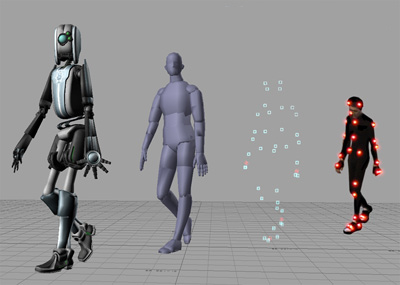
A model is an informative representation of an object, person, or system. The term originally denoted the plans of a building in 16th-century English, and derived via French and Italian ultimately from Latin modulus, 'a measure'. Models can be divided into physical models (e.g. a ship model) and abstract models (e.g. a set of mathematical equations describing the workings of the atmosphere for the purpose of weather forecasting). Abstract or conceptual models are central to philosophy of science. In scholarly research and applied science, a model should not be confused with a theory: while a model seeks only to represent reality with the purpose of better understanding or predicting the world, a theory is more ambitious in that it claims to be an explanation of reality. == Types of model == === Model in specific contexts === As a noun, model has specific meanings in certain fields, derived from its original meaning of "structural design or layout": Model (art), a person posing for an artist, e.g. a 15th-century criminal representing the biblical Judas in Leonardo da Vinci's painting The Last Supper Model (person), a person who serves as a template for others to copy, as in a role model, often in the context of advertising commercial products; e.g. the first fashion model, Marie Vernet Worth in 1853, wife of designer Charles Frederick Worth. Model (product), a particular design of a product as displayed in a catalogue or show room (e.g. Ford Model T, an early car model) Model (organism) a non-human species that is studied to understand biological phenomena in other organisms, e.g. a guinea pig starved of vitamin C to study scurvy, an experiment that would be immoral to conduct on a person Model (mimicry), a species that is mimicked by another species Model (logic), a structure (a set of items, such as natural numbers 1, 2, 3,..., along with mathematical operations such as addition and multiplication, and relations, such as < {\displaystyle <} ) that satisfies a given system of axioms (basic truisms), i.e. that satisfies the statements of a given theory Model (CGI), a mathematical representation of any surface of an object in three dimensions via specialized software Model (MVC), the information-representing internal component of a software, as distinct from its user interface === Physical model === A physical model (most commonly referred to simply as a model but in this context distinguished from a conceptual model) is a smaller or larger physical representation of an object, person or system. The object being modelled may be small (e.g., an atom) or large (e.g., the Solar System) or life-size (e.g., a fashion model displaying clothes for similarly-built potential customers). The geometry of the model and the object it represents are often similar in the sense that one is a rescaling of the other. However, in many cases the similarity is only approximate or even intentionally distorted. Sometimes the distortion is systematic, e.g., a fixed scale horizontally and a larger fixed scale vertically when modelling topography to enhance a region's mountains. An architectural model permits visualization of internal relationships within the structure or external relationships of the structure to the environment. Another use is as a toy. Instrumented physical models are an effective way of investigating fluid flows for engineering design. Physical models are often coupled with computational fluid dynamics models to optimize the design of equipment and processes. This includes external flow such as around buildings, vehicles, people, or hydraulic structures. Wind tunnel and water tunnel testing is often used for these design efforts. Instrumented physical models can also examine internal flows, for the design of ductwork systems, pollution control equipment, food processing machines, and mixing vessels. Transparent flow models are used in this case to observe the detailed flow phenomenon. These models are scaled in terms of both geometry and important forces, for example, using Froude number or Reynolds number scaling (see Similitude). In the pre-computer era, the UK economy was modelled with the hydraulic model MONIAC, to predict for example the effect of tax rises on employment. === Conceptual model === A conceptual model is a theoretical representation of a system, e.g. a set of mathematical equations attempting to describe the workings of the atmosphere for the purpose of weather forecasting. It consists of concepts used to help understand or simulate a subject the model represents. Abstract or conceptual models are central to philosophy of science, as almost every scientific theory effectively embeds some kind of model of the physical or human sphere. In some sense, a physical model "is always the reification of some conceptual model; the conceptual model is conceived ahead as the blueprint of the physical one", which is then constructed as conceived. Thus, the term refers to models that are formed after a conceptualization or generalization process. === Examples === Conceptual model (computer science), an agreed representation of entities and their relationships, to assist in developing software Economic model, a theoretical construct representing economic processes Language model, a probabilistic model of a natural language, used for speech recognition, language generation, and information retrieval Large language models are artificial neural networks used for generative artificial intelligence (AI), e.g. ChatGPT Mathematical model, a description of a system using mathematical concepts and language Statistical model, a mathematical model that usually specifies the relationship between one or more random variables and other non-random variables Model (CGI), a mathematical representation of any surface of an object in three dimensions via specialized software Medical model, a proposed "set of procedures in which all doctors are trained" Mental model, in psychology, an internal representation of external reality Model (logic), a set along with a collection of finitary operations, and relations that are defined on it, satisfying a given collection of axioms Model (MVC), information-representing component of a software, distinct from the user interface (the "view"), both linked by the "controller" component, in the context of the model–view–controller software design Model act, a law drafted centrally to be disseminated and proposed for enactment in multiple independent legislatures Standard model (disambiguation) == Properties of models, according to general model theory == According to Herbert Stachowiak, a model is characterized by at least three properties: 1. Mapping A model always is a model of something—it is an image or representation of some natural or artificial, existing or imagined original, where this original itself could be a model. 2. Reduction In general, a model will not include all attributes that describe the original but only those that appear relevant to the model's creator or user. 3. Pragmatism A model does not relate unambiguously to its original. It is intended to work as a replacement for the original a) for certain subjects (for whom?) b) within a certain time range (when?) c) restricted to certain conceptual or physical actions (what for?). For example, a street map is a model of the actual streets in a city (mapping), showing the course of the streets while leaving out, say, traffic signs and road markings (reduction), made for pedestrians and vehicle drivers for the purpose of finding one's way in the city (pragmatism). Additional properties have been proposed, like extension and distortion as well as validity. The American philosopher Michael Weisberg differentiates between concrete and mathematical models and proposes computer simulations (computational models) as their own class of models. == Uses of models == According to Bruce Edmonds, there are at least 5 general uses for models: Prediction: reliably anticipating unknown data, including data within the domain of the training data (interpolation), and outside the domain (extrapolation) Explanation: establishing plausible chains of causality by proposing mechanisms that can explain patterns seen in data Theoretical exposition: discovering or proposing new hypotheses, or refuting existing hypotheses about the behaviour of the system being modelled Description: representing important aspects of the system being modelled Illustration: communicating an idea or explanation
Structural similarity index measure
The structural similarity index measure (SSIM) is a method for predicting the perceived quality of digital television and cinematic pictures, as well as other kinds of digital images and videos. It is also used for measuring the similarity between two images. The SSIM index is a full reference metric; in other words, the measurement or prediction of image quality is based on an initial uncompressed or distortion-free image as reference. SSIM is a perception-based model that considers image degradation as perceived change in structural information, while also incorporating important perceptual phenomena, including both luminance masking and contrast masking terms. This distinguishes from other techniques such as mean squared error (MSE) or peak signal-to-noise ratio (PSNR) that instead estimate absolute errors. Structural information is the idea that the pixels have strong inter-dependencies especially when they are spatially close. These dependencies carry important information about the structure of the objects in the visual scene. Luminance masking is a phenomenon whereby image distortions (in this context) tend to be less visible in bright regions, while contrast masking is a phenomenon whereby distortions become less visible where there is significant activity or "texture" in the image. == History == The predecessor of SSIM was called Universal Quality Index (UQI), or Wang–Bovik index, which was developed by Zhou Wang and Alan Bovik in 2001. This evolved, through their collaboration with Hamid Sheikh and Eero Simoncelli, into the current version of SSIM, which was published in April 2004 in the IEEE Transactions on Image Processing. In addition to defining the SSIM quality index, the paper provides a general context for developing and evaluating perceptual quality measures, including connections to human visual neurobiology and perception, and direct validation of the index against human subject ratings. The basic model was developed in the Laboratory for Image and Video Engineering (LIVE) at The University of Texas at Austin and further developed jointly with the Laboratory for Computational Vision (LCV) at New York University. Further variants of the model have been developed in the Image and Visual Computing Laboratory at University of Waterloo and have been commercially marketed. SSIM subsequently found strong adoption in the image processing community and in the television and social media industries. The 2004 SSIM paper has been cited over 50,000 times according to Google Scholar, making it one of the highest cited papers in the image processing and video engineering fields. It was recognized with the IEEE Signal Processing Society Best Paper Award for 2009. It also received the IEEE Signal Processing Society Sustained Impact Award for 2016, indicative of a paper having an unusually high impact for at least 10 years following its publication. Because of its high adoption by the television industry, the authors of the original SSIM paper were each accorded a Primetime Engineering Emmy Award in 2015 by the Television Academy. == Algorithm == The SSIM index is calculated between two windows of pixel values x {\displaystyle x} and y {\displaystyle y} of common size, from corresponding locations in two images to be compared. These SSIM values can be aggregated across the full images by averaging or other variations. === Special-case formula === In one simple special case, further explained in the next section, the SSIM measure between x {\displaystyle x} and y {\displaystyle y} is: SSIM ( x , y ) = ( 2 μ x μ y + c 1 ) ( 2 σ x y + c 2 ) ( μ x 2 + μ y 2 + c 1 ) ( σ x 2 + σ y 2 + c 2 ) {\displaystyle {\hbox{SSIM}}(x,y)={\frac {(2\mu _{x}\mu _{y}+c_{1})(2\sigma _{xy}+c_{2})}{(\mu _{x}^{2}+\mu _{y}^{2}+c_{1})(\sigma _{x}^{2}+\sigma _{y}^{2}+c_{2})}}} with: μ x {\displaystyle \mu _{x}} the pixel sample mean of x {\displaystyle x} ; μ y {\displaystyle \mu _{y}} the pixel sample mean of y {\displaystyle y} ; σ x 2 {\displaystyle \sigma _{x}^{2}} the sample variance of x {\displaystyle x} ; σ y 2 {\displaystyle \sigma _{y}^{2}} the sample variance of y {\displaystyle y} ; σ x y {\displaystyle \sigma _{xy}} the sample covariance of x {\displaystyle x} and y {\displaystyle y} ; c 1 = ( k 1 L ) 2 {\displaystyle c_{1}=(k_{1}L)^{2}} , c 2 = ( k 2 L ) 2 {\displaystyle c_{2}=(k_{2}L)^{2}} two variables to stabilize the division with weak denominator; L {\displaystyle L} the dynamic range of the pixel-values (typically this is 2 # b i t s p e r p i x e l − 1 {\displaystyle 2^{\#bits\ per\ pixel}-1} ); k 1 = 0.01 {\displaystyle k_{1}=0.01} and k 2 = 0.03 {\displaystyle k_{2}=0.03} by default. === General formula and components === The SSIM formula is based on three comparison measurements between the samples of x {\displaystyle x} and y {\displaystyle y} : luminance ( l {\displaystyle l} ), contrast ( c {\displaystyle c} ), and structure ( s {\displaystyle s} ). The individual comparison functions are: l ( x , y ) = 2 μ x μ y + c 1 μ x 2 + μ y 2 + c 1 {\displaystyle l(x,y)={\frac {2\mu _{x}\mu _{y}+c_{1}}{\mu _{x}^{2}+\mu _{y}^{2}+c_{1}}}} c ( x , y ) = 2 σ x σ y + c 2 σ x 2 + σ y 2 + c 2 {\displaystyle c(x,y)={\frac {2\sigma _{x}\sigma _{y}+c_{2}}{\sigma _{x}^{2}+\sigma _{y}^{2}+c_{2}}}} s ( x , y ) = σ x y + c 3 σ x σ y + c 3 {\displaystyle s(x,y)={\frac {\sigma _{xy}+c_{3}}{\sigma _{x}\sigma _{y}+c_{3}}}} The SSIM for each block is then a weighted combination of those comparative measures: SSIM ( x , y ) = l ( x , y ) α ⋅ c ( x , y ) β ⋅ s ( x , y ) γ {\displaystyle {\text{SSIM}}(x,y)=l(x,y)^{\alpha }\cdot c(x,y)^{\beta }\cdot s(x,y)^{\gamma }} Choosing the third denominator stabilizing constant as: c 3 = c 2 / 2 {\displaystyle c_{3}=c_{2}/2} leads to a simplification when combining the c and s components with equal exponents ( β = γ {\displaystyle \beta =\gamma } ), as the numerator of c is then twice the denominator of s, leading to a cancellation leaving just a 2. Setting the weights (exponents) α , β , γ {\displaystyle \alpha ,\beta ,\gamma } to 1, the formula can then be reduced to the special case shown above. === Mathematical properties === SSIM satisfies the identity of indiscernibles, and symmetry properties, but not the triangle inequality or non-negativity, and thus is not a distance function. However, under certain conditions, SSIM may be converted to a normalized root MSE measure, which is a distance function. The square of such a function is not convex, but is locally convex and quasiconvex, making SSIM a feasible target for optimization. === Application of the formula === In order to evaluate the image quality, this formula is usually applied only on luma, although it may also be applied on color (e.g., RGB) values or chromatic (e.g. YCbCr) values. The resultant SSIM index is a decimal value between -1 and 1, where 1 indicates perfect similarity, 0 indicates no similarity, and -1 indicates perfect anti-correlation. For an image, it is typically calculated using a sliding Gaussian window of size 11×11 or a block window of size 8×8. The window can be displaced pixel-by-pixel on the image to create an SSIM quality map of the image. In the case of video quality assessment, the authors propose to use only a subgroup of the possible windows to reduce the complexity of the calculation. === Variants === ==== Multi-scale SSIM ==== A more advanced form of SSIM, called Multiscale SSIM (MS-SSIM) is conducted over multiple scales through a process of multiple stages of sub-sampling, reminiscent of multiscale processing in the early vision system. It has been shown to perform equally well or better than SSIM on different subjective image and video databases. ==== Multi-component SSIM ==== Three-component SSIM (3-SSIM) is a form of SSIM that takes into account the fact that the human eye can see differences more precisely on textured or edge regions than on smooth regions. The resulting metric is calculated as a weighted average of SSIM for three categories of regions: edges, textures, and smooth regions. The proposed weighting is 0.5 for edges, 0.25 for the textured and smooth regions. The authors mention that a 1/0/0 weighting (ignoring anything but edge distortions) leads to results that are closer to subjective ratings. This suggests that edge regions play a dominant role in image quality perception. The authors of 3-SSIM have also extended the model into four-component SSIM (4-SSIM). The edge types are further subdivided into preserved and changed edges by their distortion status. The proposed weighting is 0.25 for all four components. ==== Structural dissimilarity ==== Structural dissimilarity (DSSIM) may be derived from SSIM, though it does not constitute a distance function as the triangle inequality is not necessarily satisfied. DSSIM ( x , y ) = 1 − SSIM ( x , y ) 2 {\displaystyle {\hbox{DSSIM}}(x,y)={\frac {1-{\hbox{SSIM}}(x,y)}{2}}} ==== Video quality metrics and temporal variants ==== It is worth noting that the original vers
Emotion recognition
Emotion recognition is the process of identifying human emotion. People vary widely in their accuracy at recognizing the emotions of others. Use of technology to help people with emotion recognition is a relatively nascent research area. Generally, the technology works best if it uses multiple modalities in context. To date, the most work has been conducted on automating the recognition of facial expressions from video, spoken expressions from audio, written expressions from text, and physiology as measured by wearables. == Human == Humans show a great deal of variability in their abilities to recognize emotion. A key point to keep in mind when learning about automated emotion recognition is that there are several sources of "ground truth", or truth about what the real emotion is. Suppose we are trying to recognize the emotions of Alex. One source is "what would most people say that Alex is feeling?" In this case, the 'truth' may not correspond to what Alex feels, but may correspond to what most people would say it looks like Alex feels. For example, Alex may actually feel sad, but he puts on a big smile and then most people say he looks happy. If an automated method achieves the same results as a group of observers it may be considered accurate, even if it does not actually measure what Alex truly feels. Another source of 'truth' is to ask Alex what he truly feels. This works if Alex has a good sense of his internal state, and wants to tell you what it is, and is capable of putting it accurately into words or a number. However, some people are alexithymic and do not have a good sense of their internal feelings, or they are not able to communicate them accurately with words and numbers. In general, getting to the truth of what emotion is actually present can take some work, can vary depending on the criteria that are selected, and will usually involve maintaining some level of uncertainty. == Automatic == Decades of scientific research have been conducted developing and evaluating methods for automated emotion recognition. There is now an extensive literature proposing and evaluating hundreds of different kinds of methods, leveraging techniques from multiple areas, such as signal processing, machine learning, computer vision, and speech processing. Different methodologies and techniques may be employed to interpret emotion such as Bayesian networks. , Gaussian Mixture models and Hidden Markov Models and deep neural networks. === Approaches === The accuracy of emotion recognition is usually improved when it combines the analysis of human expressions from multimodal forms such as texts, physiology, audio, or video. Different emotion types are detected through the integration of information from facial expressions, body movement and gestures, and speech. The technology is said to contribute in the emergence of the so-called emotional or emotive Internet. The existing approaches in emotion recognition to classify certain emotion types can be generally classified into three main categories: knowledge-based techniques, statistical methods, and hybrid approaches. ==== Knowledge-based techniques ==== Knowledge-based techniques (sometimes referred to as lexicon-based techniques), utilize domain knowledge and the semantic and syntactic characteristics of text and potentially spoken language in order to detect certain emotion types. In this approach, it is common to use knowledge-based resources during the emotion classification process such as WordNet, SenticNet, ConceptNet, and EmotiNet, to name a few. One of the advantages of this approach is the accessibility and economy brought about by the large availability of such knowledge-based resources. A limitation of this technique on the other hand, is its inability to handle concept nuances and complex linguistic rules. Knowledge-based techniques can be mainly classified into two categories: dictionary-based and corpus-based approaches. Dictionary-based approaches find opinion or emotion seed words in a dictionary and search for their synonyms and antonyms to expand the initial list of opinions or emotions. Corpus-based approaches on the other hand, start with a seed list of opinion or emotion words, and expand the database by finding other words with context-specific characteristics in a large corpus. While corpus-based approaches take into account context, their performance still vary in different domains since a word in one domain can have a different orientation in another domain. ==== Statistical methods ==== Statistical methods commonly involve the use of different supervised machine learning algorithms in which a large set of annotated data is fed into the algorithms for the system to learn and predict the appropriate emotion types. Machine learning algorithms generally provide more reasonable classification accuracy compared to other approaches, but one of the challenges in achieving good results in the classification process, is the need to have a sufficiently large training set. Some of the most commonly used machine learning algorithms include Support Vector Machines (SVM), Naive Bayes, and Maximum Entropy. Deep learning, which is under the unsupervised family of machine learning, is also widely employed in emotion recognition. Well-known deep learning algorithms include different architectures of Artificial Neural Network (ANN) such as Convolutional Neural Network (CNN), Long Short-term Memory (LSTM), and Extreme Learning Machine (ELM). The popularity of deep learning approaches in the domain of emotion recognition may be mainly attributed to its success in related applications such as in computer vision, speech recognition, and Natural Language Processing (NLP). ==== Hybrid approaches ==== Hybrid approaches in emotion recognition are essentially a combination of knowledge-based techniques and statistical methods, which exploit complementary characteristics from both techniques. Some of the works that have applied an ensemble of knowledge-driven linguistic elements and statistical methods include sentic computing and iFeel, both of which have adopted the concept-level knowledge-based resource SenticNet. The role of such knowledge-based resources in the implementation of hybrid approaches is highly important in the emotion classification process. Since hybrid techniques gain from the benefits offered by both knowledge-based and statistical approaches, they tend to have better classification performance as opposed to employing knowledge-based or statistical methods independently. A downside of using hybrid techniques however, is the computational complexity during the classification process. === Datasets === Data is an integral part of the existing approaches in emotion recognition and in most cases it is a challenge to obtain annotated data that is necessary to train machine learning algorithms. For the task of classifying different emotion types from multimodal sources in the form of texts, audio, videos or physiological signals, the following datasets are available: HUMAINE: provides natural clips with emotion words and context labels in multiple modalities Belfast database: provides clips with a wide range of emotions from TV programs and interview recordings SEMAINE: provides audiovisual recordings between a person and a virtual agent and contains emotion annotations such as angry, happy, fear, disgust, sadness, contempt, and amusement IEMOCAP: provides recordings of dyadic sessions between actors and contains emotion annotations such as happiness, anger, sadness, frustration, and neutral state eNTERFACE: provides audiovisual recordings of subjects from seven nationalities and contains emotion annotations such as happiness, anger, sadness, surprise, disgust, and fear DEAP: provides electroencephalography (EEG), electrocardiography (ECG), and face video recordings, as well as emotion annotations in terms of valence, arousal, and dominance of people watching film clips DREAMER: provides electroencephalography (EEG) and electrocardiography (ECG) recordings, as well as emotion annotations in terms of valence, dominance of people watching film clips MELD: is a multiparty conversational dataset where each utterance is labeled with emotion and sentiment. MELD provides conversations in video format and hence suitable for multimodal emotion recognition and sentiment analysis. MELD is useful for multimodal sentiment analysis and emotion recognition, dialogue systems and emotion recognition in conversations. MuSe: provides audiovisual recordings of natural interactions between a person and an object. It has discrete and continuous emotion annotations in terms of valence, arousal and trustworthiness as well as speech topics useful for multimodal sentiment analysis and emotion recognition. UIT-VSMEC: is a standard Vietnamese Social Media Emotion Corpus (UIT-VSMEC) with about 6,927 human-annotated sentences with six emotion labels, contributing to emotion recognition research in Vietnamese
Pointer algorithm
In computer science, a pointer algorithm (sometimes called a pointer machine, or a reference machine; see the article Pointer machine for a close but non-identical concept) is a type of algorithm that manages a linked data structure. This concept is used as a model for lower-bound proofs and specific restrictions on the linked data structure and on the algorithm's access to the structure vary. This model has been used extensively with problems related to the disjoint-set data structure. Thus, Tarjan and La Poutré used this model to prove lower bounds on the amortized complexity of a disjoint-set data structure (La Poutré also addressed the interval split-find problem). Blum used this model to prove a lower bound on the single operation worst-case time of disjoint set data structure. Blum and Rochow proved a worst-case lower bound for the interval union-find problem. == Example == In Tarjan's lower bound for the disjoint set union problem, the assumptions on the algorithm are: The algorithm maintains a linked structure of nodes. Each element of the problem is associated with a node. Each set is represented by a node. The nodes of each set constitute a distinct connected component in the structure (this property is called separability). The find operation is performed by following links from the element node to the set node. Under these assumptions, the lower bound of Ω ( m α ( m , n ) ) {\displaystyle \Omega (m\alpha (m,n))} on the cost of a sequence of m operations is proven.
Metadata controller
Metadata controller (or MDC) is a storage area network (SAN) technology for managing file locking, space allocation and data access authorization. This is needed when several clients are given block level access to the same disk volume, data storage sharing. MDCs are only used on high-end servers. These are never found on user computers. In the absence of MDC over a SAN there is no possible way of ensuring privacy of the stored data. This controller can also play its role as a sharing device in case the administrators allow other servers to access certain blocks in a particular SAN. The access granted to the servers is of different levels. Some times it may happen that the server is not able to see a block or make changes in it in case of a locked file. This is caused by grant of low level access. If different clients on SAN happen to know each other, access may be granted to shift a certain block from one server to another. This allows the recipient server to use the block and make changes in it. MDCs work as enzymes. They require certain types of SANs and networks to work properly. If a controller is connected to the right network it will boost its output. In case of wrong connection i.e. with the incorrect network, it will decrease its performance.
Albert One
Albert One is an artificial intelligence chatbot created by Robby Garner and designed to mimic the way humans make conversations using a multi-faceted approach in natural language programming. == History == In both 1998 and 1999, Albert One won the Loebner Prize Contest, a competition between chatterbots. Some parts of Albert were deployed on the internet beginning in 1995, to gather information about what kinds of things people would say to a chatterbot. Another element of Albert One involved the building of a large database of human statements, and associated replies. This portion of the project was tested at the 1994-1997 Loebner Prize contests. Albert was the first of Robby Garner's multifaceted bots. The Albert One system was composed of several subsystems. Among those were a version of Eliza, the therapist, Elivs, another Eliza-like bot, and several other helper applications working together in a hierarchical arrangement. As a continuation of the stimulus-response library, various other database queries and assertions were tested to arrive at each of Albert's responses. Robby went on to develop networked examples of this kind of hierarchical "glue" at The Turing Hub.
Document
A document is a written, drawn, presented, or memorialized representation of thought, often the manifestation of non-fictional, as well as fictional, content. The etymology of the word "document" derives from the Latin documentum, which denotes a "teaching" or "lesson": the verb doceō denotes "to teach". Historically, the term "document" was usually used to indicate written proof useful as evidence of a truth or fact. In the Computer Age, the term "document" typically refers to a primarily textual computer file, encompassing its structural and format elements, such as fonts, colors, and images. In the contemporary era, the definition of "document" has expanded beyond its traditional medium, such as paper, to encompass electronic documents as well. History, events, examples, opinions, stories, and creativity can all be expressed in documents. "Documentation" is distinct because it has more denotations than "document". Documents are also distinguished from "realia", which are three-dimensional objects that would otherwise satisfy the definition of "document" because they memorialize or represent thought. Documents are usually considered to be two-dimensional representations. == Abstract definitions == The concept of "document" has been defined by Suzanne Briet as "any concrete or symbolic indication, preserved or recorded, for reconstructing or for proving a phenomenon, whether physical or mental." An often-cited article concludes that "the evolving notion of document" among Jonathan Priest, Paul Otlet, Briet, Walter Schürmeyer, and the other documentalists increasingly emphasized whatever functioned as a document rather than traditional physical forms of documents. The shift to digital technology would seem to make this distinction even more important. David M. Levy has said that an emphasis on the technology of digital documents has impeded our understanding of digital documents as documents. A conventional document, such as a mail message or a technical report, exists physically in digital technology as a string of bits, as does everything else in a digital environment. As an object of study, it has been made into a document. It has become physical evidence by those who study it. "Document" is defined in library and information science and documentation science as a fundamental, abstract idea: the word denotes everything that may be represented or memorialized to serve as evidence. The classic example provided by Briet is an antelope: "An antelope running wild on the plains of Africa should not be considered a document[;] she rules. But if it were to be captured, taken to a zoo and made an object of study, it has been made into a document. It has become physical evidence being used by those who study it. Indeed, scholarly articles written about the antelope are secondary documents, since the antelope itself is the primary document." This opinion has been interpreted as an early expression of actor–network theory. == Kinds == A document can be structured, like tabular documents, lists, forms, or scientific charts, semi-structured like a book or a newspaper article, or unstructured like a handwritten note. Documents are sometimes classified as secret, private, or public. They may also be described as drafts or proofs. When a document is copied, the source is denominated the "original". Documents are used in numerous fields, e.g.: Academia: manuscript, thesis, paper, journal, chart, and technical drawing Media: mock-up, script, image, photography, and newspaper article Administration, law, and politics: application, brief, certificate, commission, constitutional document, form, gazette, identity document, license, manifesto, summons, census, and white paper Business: invoice, request for proposal, proposal, contract, packing slip, manifest, report (detailed and summary), spreadsheet, material safety data sheet, waybill, bill of lading, financial statement, nondisclosure agreement (NDA), mutual nondisclosure agreement, and user guide Geography and planning: topographic map, cadastre, legend, and architectural plan Such standard documents can be drafted based on a template. == Drafting == The page layout of a document is how information is graphically arranged in the space of the document, e.g., on a page. If the appearance of the document is of concern, the page layout is generally the responsibility of a graphic designer. Typography concerns the design of letter and symbol forms and their physical arrangement in the document (see typesetting). Information design concerns the effective communication of information, especially in industrial documents and public signs. Simple textual documents may not require visual design and may be drafted only by an author, clerk, or transcriber. Forms may require a visual design for their initial fields, but not to complete the forms. == Media == Traditionally, the medium of a document was paper and the information was applied to it in ink, either by handwriting (to make a manuscript) or by a mechanical process (e.g., a printing press or laser printer). Today, some short documents also may consist of sheets of paper stapled together. Historically, documents were inscribed with ink on papyrus (starting in ancient Egypt) or parchment; scratched as runes or carved on stone using a sharp tool, e.g., the Tablets of Stone described in the Bible; stamped or incised in clay and then baked to make clay tablets, e.g., in the Sumerian and other Mesopotamian civilizations. The papyrus or parchment was often rolled into a scroll or cut into sheets and bound into a codex (book). Contemporary electronic means of memorializing and displaying documents include: Monitor of a desktop computer, laptop, tablet; optionally with a printer to produce a hard copy; Personal digital assistant; Dedicated e-book device; Electronic paper, typically, using the Portable Document Format (PDF); Information appliance; Digital audio player; and Radio and television service provider. Digital documents usually require a specific file format to be presentable in a specific medium. == In law == Documents in all forms frequently serve as material evidence in criminal and civil proceedings. The forensic analysis of such a document is within the scope of questioned document examination. To catalog and manage the large number of documents that may be produced during litigation, Bates numbering is often applied to all documents in the lawsuit so that each document has a unique, arbitrary, identification number.