The memory color effect is the phenomenon that the canonical hue of a type of object acquired through experience (e.g. the sky, a leaf, or a strawberry) can directly modulate the appearance of the actual colors of objects. Human observers acquire memory colors through their experiences with instances of that type. For example, most human observers know that an apple typically has a reddish hue; this knowledge about the canonical color which is represented in memory constitutes a memory color. As an example of the effect, normal human trichromats, when presented with a gray banana, often perceive the gray banana as being yellow - the banana's memory color. In light of this, subjects typically adjust the color of the banana towards the color blue - the opponent color of yellow - when asked to adjust its surface to gray to cancel the subtle activation of banana's memory color. Subsequent empirical studies have also shown the memory color effect on man-made objects (e.g. smurfs, German mailboxes), the effect being especially pronounced for blue and yellow objects. To explain this, researchers have argued that because natural daylight shifts from short wavelengths of light (i.e., bluish hues) towards light of longer wavelengths (i.e., yellowish-orange hues) during the day, the memory colors for blue and yellow objects are recruited by the visual system to a higher degree to compensate for this fluctuation in illumination, thereby providing a stronger memory color effect. == Form identification == Memory color plays a role when detecting an object. In a study where participants were given objects, such as an apple, with two alternate forms for each, a crooked apple and a circular apple, researchers changed the colors of the alternate forms and asked if they could identify them. Most of the participants answered "unsure," suggesting that we use memory color when identifying an object. The research redefined memory color as a phenomenon when "a form's identity affects the phenomenal hue of that form." == Color effect on memorization == Memory color effect can be derived from the human instinct to memorize objects better. Comparing the effect of recognizing gray-scaled images and colored images, results showed that people were able to recall colored images 5% higher compared to gray-scaled images. An important factor was that higher level of contrast between the object and background color influences memory. In a specific study related to this, participants reported that colors were 5% to 10% easier to recognize compared to black and white. == Color constancy and memory color effect == Color constancy is the phenomenon where a surface to appear to be of the same color under a wide rage of illumination. A study tested two hypotheses with regards to color memory; the photoreceptor hypothesis and the surface reflectance hypothesis. The test color was surround either by various color patches forming a complex pattern or a uniform “grey” field at the same chromaticity as that of the illuminant. The test color was presented on a dark background for the control group. It was observed that complex surround results where in line with the surface-reflectance hypothesis and not the photoreceptor hypothesis, showing that the accuracy and precision of color memory are fundamentals to understanding the phenomenon of color constancy. == Significance to the evolution of trichromacy == While objects that possess canonical hues make up a small percentage of the objects which populate humans’ visual experience, the human visual system evolved in an environment populated with objects that possess canonical hues. This suggests that the memory color effect is related to the emergence of trichromacy because it has been argued that trichromacy evolved to optimize the ability to detect ripe fruits—objects that appear in canonical hues. == In perception research == In perception research, the memory color effect is cited as evidence for the opponent color theory, which states that four basic colors can be paired with its opponent color: red—green, blue—yellow. This explains why participants adjust the ripe banana color to a blueish tone to make its memory color yellow as gray. Researchers have also found empirical evidence that suggests memory color is recruited by the visual system to achieve color constancy. For example, participants had a lower percentage of color constancy when looking at a color incongruent scene, such as a purple banana, compared to a color diagnostical scene, a yellow banana. This suggests that color constancy is influenced by the color of objects that we are familiar with, which the memory color effect takes part.
Amaryllo
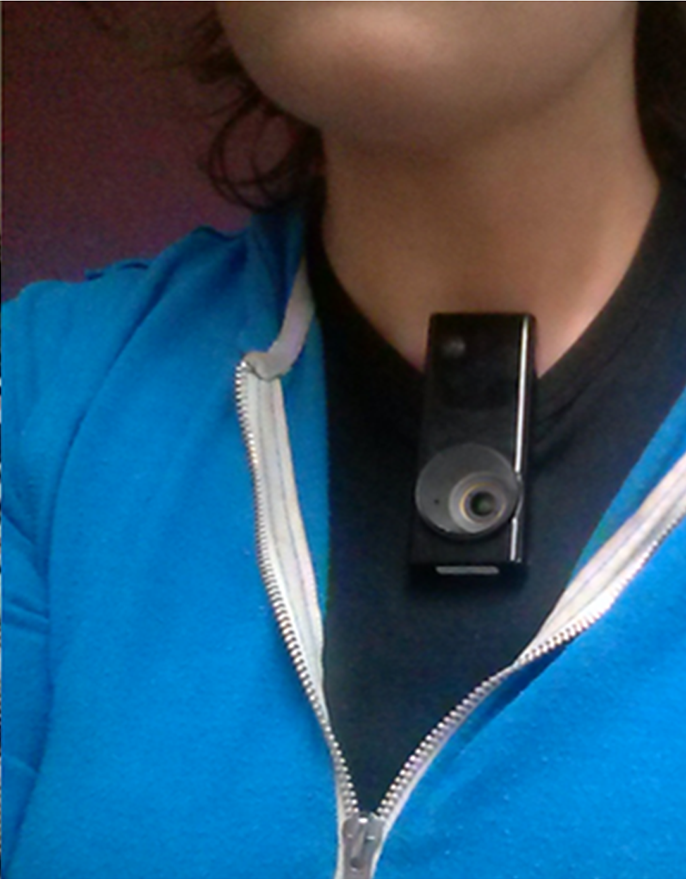
Amaryllo Inc. is a multinational company founded in Amsterdam, the Netherlands, and now headquartered in the United States. It operates as a cloud service platform, providing cloud storage and cloud computing solutions to enterprises and brand companies. Amaryllo began with Skype IP camera development, pioneering biometric robotic technologies, encrypted P2P network, and secure cloud storage. Amaryllo was founded by Band of Angels member, Marcus Yang to develop patents for a new type of robotic cameras that is claimed to "talk, hear, sense, recognize human faces, and track intruders". It also claims to have made the world's first security robot based on the WebRTC protocol, Icam PRO FHD, and won the 2015 CES Best of Innovation Award under Embedded Technology category. Its home security robots claim to employ 256-bit encryption and run on the WebRTC protocol. Amaryllo products are sold in over 100 Countries across 6 Continents. == History == Amaryllo revealed its first smart home security products at Internationale Funkausstellung Berlin (IFA) 2013 with a Skype-enabled IP camera called iCam HD. Amaryllo announced its second Skype-certified smart home product, iBabi HD, at CES 2014. The company was chosen as a "Cool Vendor" by Gartner in Connected Home 2014. Amaryllo introduced WebRTC-based smart home products after Microsoft terminated embedded Skype services in mid 2014. Since then, Amaryllo has been developing camera robots with auto-tracking and facial recognition technologies. Its camera robots, ATOM AR3 and ATOM AR3S, were introduced in late 2016. It focuses on wired and wireless technology based on AI services. == Cloud Service Platform == Amaryllo offers prepaid cloud storage through digital codes and gift cards, distributed via InComm Payments, Blackhawk Network, and other partners. It provides high-performance cloud computing service through Rescale partnership. Amaryllo provides free cameras under an annual cloud storage subscription on its website. == Global Supercomputing Network (GSN) == The Global Supercomputing Network (GSN) is a distributed high-performance computing (HPC) platform developed by Amaryllo. The network is designed to provide scalable Infrastructure as a Service (IaaS) by connecting a global array of data centers to offer GPU computing resources for specialized industrial and scientific applications. === Architecture and Technology === GSN operates as a decentralized distributed network of servers rather than a single centralized supercomputer. The platform integrates an artificial intelligence assistant named Genie, also developed by Amaryllo. Genie's primary function is to manage computing allocation, helping users identify and connect to available resources across the network’s various nodes based on the specific requirements of their tasks. === Services === The network primarily focuses on the rental of GPU processing resources, catering to fields that require massive parallel processing capabilities, including: Artificial Intelligence and Machine Learning: Training large language models (LLMs) and neural networks. Scientific Simulations: Executing complex calculations in physics, chemistry, and bioinformatics. Data Analytics: Processing large-scale datasets. By utilizing a rental model, GSN allows organizations to access high-end hardware without the capital expenditure associated with purchasing and maintaining physical server infrastructure. === Infrastructure and Partnerships === The network’s physical footprint is expanded through strategic partnerships with data center operators. GSN collaborates with MettaDC and Cyber DC to provide colocation services. These partnerships facilitate the deployment of Nvidia server clusters within secure, Tier-rated facilities, ensuring high availability and connectivity for GSN users. == Official Brand Licensee of HP == Amaryllo Inc. is an official licensee of HP Inc., managing both B2B and B2C cloud services under the HP brand. Through this partnership, Amaryllo offers a range of secure and scalable cloud solutions, including HP Cloud, which provides subscription and one-time payment storage for reliable data backup and storage for individuals, families, and businesses. HP Cloud employs cloud computing technologies to create smart albums for users.
Autonomous things
Autonomous things, abbreviated AuT, or the Internet of autonomous things, abbreviated as IoAT, is an emerging term for the technological developments that are expected to bring computers into the physical environment as autonomous entities without human direction, freely moving and interacting with humans and other objects. Self-navigating drones are the first AuT technology in (limited) deployment. It is expected that the first mass-deployment of AuT technologies will be the autonomous car, generally expected to be available around 2020. Other currently expected AuT technologies include home robotics (e.g., machines that provide care for the elderly, infirm or young), and military robots (air, land or sea autonomous machines with information-collection or target-attack capabilities). AuT technologies share many common traits, which justify the common notation. They are all based on recent breakthroughs in the domains of (deep) machine learning and artificial intelligence. They all require extensive and prompt regulatory developments to specify the requirements from them and to license and manage their deployment (see the further reading below). And they all require unprecedented levels of safety (e.g., automobile safety) and security, to overcome concerns about the potential negative impact of the new technology. As an example, the autonomous car both addresses the main existing safety issues and creates new issues. It is expected to be much safer than existing vehicles, by eliminating the single most dangerous element – the driver. The US's National Highway Traffic Safety Administration estimates 94 percent of US accidents were the result of human error and poor decision-making, including speeding and impaired driving, and the Center for Internet and Society at Stanford Law School claims that "Some ninety percent of motor vehicle crashes are caused at least in part by human error". So while safety standards like the ISO 26262 specify the required safety, there is still a burden on the industry to demonstrate acceptable safety. While car accidents claim every year 35,000 lives in the US, and 1.25 million worldwide, some believe that even "a car that's 10 times as safe, which means 3,500 people die on the roads each year [in the US alone]" would not be accepted by the public. The acceptable level may be closer to the current figures on aviation accidents and incidents, with under a thousand worldwide deaths in most years – three orders of magnitude lower than cars. This underscores the unprecedented nature of the safety requirements that will need to be met for cars, with similar levels of safety expected for other Autonomous Things.
Inpainting
Inpainting is a conservation process where damaged, deteriorated, or missing parts of an artwork are filled in to present a complete image. This process is commonly used in image restoration. It can be applied to both physical and digital art mediums such as oil or acrylic paintings, chemical photographic prints, sculptures, or digital images and video. With its roots in physical artwork, such as painting and sculpture, traditional inpainting is performed by a trained art conservator who has carefully studied the artwork to determine the mediums and techniques used in the piece, potential risks of treatments, and ethical appropriateness of treatment. == History == The modern use of inpainting can be traced back to Pietro Edwards (1744–1821), Director of the Restoration of the Public Pictures in Venice, Italy. Using a scientific approach, Edwards focused his restoration efforts on the intentions of the artist. It was during the 1930 International Conference for the Study of Scientific Methods for the Examination and Preservation of Works of Art, that the modern approach to inpainting was established. Helmut Ruhemann (1891–1973), a German restorer and conservator, led the discussions on the use of inpainting in conservation. Helmut Ruhemann was a leading figure in modernizing restoration and conservation. His greatest contribution to the field of conservation "was his insistence on following the methods of the original painter exactly, and on understanding the painter's artistic intention". After his career of over 40 years as a conservator, Ruhemann published his treatise The Cleaning of Paintings: Problems & Potentialities in 1968. In describing his method, Ruhemann states that "The surface [of the fill] should be slightly lower than that of the surrounding paint to allow for the thickness of the inpainting...Inpainting medium should look and behave like the original medium, but must not darken with age." Cesare Brandi (1906–1988) developed the teoria del restauro, the inpainting approach combining aesthetics and psychology. However, this approach was used primarily by Italian restorers and conservators, with the terminology becoming widespread in the 1990s. Technological advancements led to new applications of inpainting. Widespread use of digital techniques range from entirely automatic computerized inpainting to tools used to simulate the process manually. Since the mid-1990s, the process of inpainting has evolved to include digital media. More commonly known as image or video interpolation, a form of estimation, digital inpainting includes the use of computer software that relies on sophisticated algorithms to replace lost or corrupted parts of the image data. == Ethics == In order to preserve the integrity of an original artwork, any inpainting technique or treatment applied to physical or digital work should be reversible or distinguishable from the original content of the artwork. Prior to any treatments, conservators proceed according to the American Institute of Conservation of Historical and Artistic Works. There are several ethic considerations before Inpainting can be justified. Various deliberation decisions over the ethical appropriateness of the amount and type of inpainting done, resides on many factors. As most conservation treatments, inpainting's ethical questions rest mainly with authenticity, reversibility and documentation.Any intervention to compensate for loss should be documented in treatment records and reports and should be detectable by common examination methods. Such compensation should be reversible and should not falsely modify the known aesthetic, conceptual, and physical characteristics of the cultural property, especially by removing or obscuring original material.New technologies and the aesthetic demand for perfect images without imperfections challenge conservators' ethical practices to protect the integrity of originals. == Methods == Inpainting methods and techniques depend on the desired goal and type of image being treated. Treatments to fill in the gaps are different between physical and digital art. In inpainting, detailed records of the initial state of the images can help with the treatment and replicate the original closer. === Physical inpainting === Inpainting is rooted in the conservation and restoration of paintings. Inpainting can aim to make a visual improvement to the artwork as a whole by repairing missing or damaged parts using methods and materials equivalent to the original artist's work. ==== Application techniques ==== By studying the painting methods of various artists and the composition of paints used historically, conservators are able to restore works very closely to their original visual appearance. The picture as a whole determines how to fill in the gap. Helmut Ruhemann's inpainting techniques by Jessell have procedures to "preserve" the quality of oil and tempera paintings. === Digital inpainting === Many programs are able to reconstruct missing or damaged areas of digital photographs and videos. Most widely known for use with digital images is Adobe Photoshop. Given the various abilities of the digital camera and the digitization of old photos, inpainting has become an automatic process that can be performed on digital images. The inpainting techniques can be applied to object removal, text removal, and other automatic modifications of images and videos. In video special effects, inpainting is usually performed after video matting. They can also be observed in applications like image compression and super-resolution. In photography and cinema, it is used for film restoration to reverse, repair, or mitigate deterioration (e.g., physical damage such as cracks in photographs, scratches and dust spots in film, or chemical damage resulting in image loss; performed infrared cleaning). It can also be used for removing red-eye, the stamped date from photographs, and objects for creative effect. This technique can be used to replace any lost blocks in the coding and transmission of images, for example, in a streaming video. It can also be used to remove logos or watermarks in videos. Deep learning neural network-based inpainting can be used for decensoring images. Deep image prior-based techniques can be used for digital image inpainting, where a trained deep learning model is either unavailable or infeasible. Deep models for visual content generation, like text-to-image or text-to-video, learn complex priors over the distribution of visual content, and can be used to inpaint missing parts. For example, videos can be separated into layers, using a technique called omnimatte, which either pretrain an omnimatte model or without any training using an omnimatte-zero model. Three main groups of 2D image-inpainting algorithms can be found in the literature. The first one to be noted is structural (or geometric) inpainting, the second one is texture inpainting, the last one is a combination of these two techniques. They use the information of the known or non-destroyed image areas in order to fill the gap, similar to how physical images are restored. ==== Structural ==== Structural or geometric inpainting is used for smooth images that have strong, defined borders. There are many different approaches to geometric inpainting, but they all come from the idea that geometry can be recovered from similar areas or domains. Bertalmio proposed a method of structural inpainting that mimics how conservators address painting restoration. Bertalmio proposed that by progressively transferring similar information from the borders of an inpainting domain inwards, the gap can be filled. ==== Textural ==== While structural/geometric inpainting works to repair smooth images, textural inpainting works best with images that are heavily textured. Texture has a repetitive pattern which means that a missing portion cannot be restored by continuing the level lines into the gap; level lines provide a complete, stable representation of an image. To repair texture in an image, one can combine frequency and spatial domain information to fill in a selected area with a desired texture. This method, while the most simple and very effective, works well when selecting a texture to be in-painted. For a texture that covers a wider area or a larger frame one would have to go through the image segmenting the areas to be in-painted and selecting the corresponding textures from throughout the image; there are programs that can help find the corresponding areas that work in a similar way as 'find and replace' works in a word processor. ==== Combined structural and textural ==== Combined structural and textural inpainting approaches simultaneously try to perform texture- and structure-filling in regions of missing image information. Most parts of an image consist of texture and structure and the boundaries between image regions contain a large amount of structural information. This is the result when blending differ
Verbal overshadowing
Verbal overshadowing is a phenomenon where giving a verbal description of sensory input impairs formation of memories of that input. This was first reported by Schooler and Engstler-Schooler (1990) where it was shown that the effects can be observed across multiple domains of cognition which are known to rely on non-verbal knowledge and perceptual expertise. One example of this is memory, which has been known to be influenced by language. Seminal work by Carmichael and collaborators (1932) demonstrated that when verbal labels are connected to non-verbal forms during an individual's encoding process, it could potentially bias the way those forms are reproduced. Because of this, memory performance relying on reportable aspects of memory that encode visual forms should be vulnerable to the effects of verbalization. == Initial findings == Schooler and Engstler-Schooler (1990) were the first to report findings of verbal overshadowing. In their study, participants watched a video of a simulated robbery and were instructed to either verbally describe the robber or engage in a control task. Those who engaged in giving a verbal description were less likely to correctly identify the robber from a test lineup, compared to those who engaged in the control task. A larger effect was detected when the verbal description was provided 20, rather than 5, minutes after the video, and immediately before the test lineup. A meta-analysis by Meissner and Brigham (2001) supported the effects of verbal overshadowing, showing a small but reliably negative effect. == General effects of verbal overshadowing == The effects of verbal overshadowing have been generalized across multiple domains of cognition that are known to rely on non-verbal knowledge and perceptual expertise, such as memory. Memory has been known to be influenced by language. Seminal work by Carmichael and collaborators (1932) demonstrated that labels attached to, or associated with, non-verbal forms during memory encoding can affect the way the forms were subsequently reproduced. Because of this, memory performance that relies on reportable aspects of memory that encode visual forms should be vulnerable to the effects of verbalization. Pelizzon, Brandimonte, and Luccio (2002) found that visual memory representations appear to incorporate visual, spatial, and temporal characteristics. It is explained as follows: With the temporal code (where the only information available is the sequence of the stimuli), performance levels remain high, unless participants are required to retrieve the stimuli in a different order from that used at encoding (visual cue). In this case, performance is significantly impaired, even in the presence of a visual cue. The study showed that order information acts as a link between the two separate representations of figure and background, hence preventing verbal overshadowing at encoding (temporal component) or attenuating its influence at retrieval (spatial component).(p. 960) Hatano, Ueno, Kitagami, and Kawaguchi found that verbal overshadowing is likely to occur when participants verbally described targets in detail. Detailed verbal descriptions resulted in more frequently inaccurate descriptions that in turn created inaccurate representations in the memories of participants. Inaccuracies are also likely to occur when face recognition comes immediately after verbalization. Other forms of non-verbal knowledge affected by verbal overshadowing include the following: [Verbal overshadowing] has also been observed when participants attempt to generate descriptions of other 'difficult-to-describe' stimuli such as colors (Schooler and Engstler-Schooler, 1990) or abstract figures (Brandimonte et al., 1997), or other non-visual tasks such as wine tasting (Melcher and Schooler, 1996), decision making (Wilson and Schooler, 1991), and insight problem-solving. (p. 871) (Schooler et al., 1993) Verbalization of stimuli leads to the disruption of non-reportable processes that are necessary for achieving insight solutions, which are distinct from language processes. Schooler, Ohlsson, and Brooks (1993) found that face recognition requires information that cannot be adequately verbalized, giving rise to difficulty in describing factors in recognition judgments. Subjects were less effective in solving insight problems when compelled to put their thoughts in words, which suggests that language may interfere with thought. The verbal overshadowing effect was not seen when participants engaged in articulatory suppression. Performance was reduced in both the verbal and non-verbal description conditions. This is evidence that verbal encoding plays a role in face recognition. By testing with distracting faces presented between study and test, Lloyd-Jones and Brown (2008) suggested a dual-process approach to recognition memory took place, that verbalization influenced familiarity-based processes at first, but its effects were later seen on recollection, when discrimination between items became more difficult. == Verbal overshadowing in facial recognition == The verbal overshadowing effect can be found for facial recognition because faces are predominately processed in a holistic or configurable manner. (Tanaka & Farah, 1993; Tanaka & Sengco, 1997) Verbalizing one's memory for a face is done using a featural or analytic strategy, leading to a drift from the configurable information about the face and to impaired recognition performance. However, Fallshore & Schooler (1995) found that the verbal overshadowing effect was not found when participants described faces of races different from their own. A study by Brown and Lloyd-Jones (2003) found that there was no verbal overshadowing effect found in car descriptions; it was only seen in facial descriptions. The authors noted that descriptions were no different on any measure including accuracy. It is suggested that less expertise in verbalizing faces rather than cars invokes a stronger shift in verbal and featural processing. This supports the concept of a transfer inappropriate retrieval framework and addresses some limitations of the effect. Wickham and Swift (2006) suggested that the verbal overshadowing effect is not seen in describing all faces, and one aspect that determines this is distinctiveness. Results showed that typical faces produce verbal overshadowing, while distinctive faces did not. In studies of eyewitness reports, variation in response criteria given by participants influenced the quality of the descriptions generated and accuracy on identification task, known as the retrieval-based effect. Face recognition was also impaired when subjects described a familiar face, such as a parent, or when describing a previously seen but novel face. Dodson, Johnson, and Schooler (1997) found that recognition was also impaired when participants were provided with a description of a previously seen face, and they were able to ignore provided versus self-generated descriptions more easily. This finding of verbal overshadowing suggested that eyewitness recognition is not only affected by their own descriptions, but of descriptions heard from others, such other eyewitness testimonies. == Voice recognition == The verbal overshadowing effect has also been found to affect voice identification. Research shows that describing a non-verbal stimuli leads to a decrease in recognition accuracy. In an unpublished study by Schooler, Fiore, Melcher, and Ambadar (1996), participants listened to a tape-recorded voice, after which they were asked either to verbally describe it or to not do so, and then asked to distinguish the voice from 3 similar distractor voices. The results showed that verbal overshadowing impaired accuracy of recognition based on gut feeling, suggesting an overall verbal overshadowing for voice recognition. Due to the forensic relevance of voices heard over the telephone and harassing phone calls that are often a problem for police, Perfect, Hunt, and Harris (2002) examined the influence of three factors on accuracy and confidence in voice recognition from a line-up. They expected to find an effect, because voice represents a class of stimuli that is difficult to describe verbally. This meets Schooler et al.'s (1997) modality mismatch criterion, meaning that describing the speakers age, gender, or accent is difficult, making voice recognition susceptible to the verbal overshadowing phenomenon. It was found that the method of memory encoding had no impact on performance, and that hearing a telephone voice reduced confidence but did not affect accuracy. They also found that providing a verbal description impaired accuracy but had no effect on confidence. The data showed an effect of verbal overshadowing in voice recognition and provided yet another disassociation between confidence and performance. Although there was a difference in confidence level, witnesses were able to identify voices over the telephone as accurately as voices heard direc
New York Institute of Technology Computer Graphics Lab
The New York Institute of Technology Computer Graphics Lab is a computer lab located at the New York Institute of Technology (NYIT), founded by Alexander Schure. It was originally located at the "pink building" on the NYIT campus. It has played an important role in the history of computer graphics and animation, as founders of Pixar and Lucasfilm Limited, including Turing Award winners Edwin Catmull and Patrick Hanrahan, began their research there. It is the birthplace of entirely 3D CGI films. The lab was initially founded to produce a short high-quality feature film with the project name of The Works. The feature, which was never completed, was a 90-minute feature that was to be the first entirely computer-generated CGI movie. Production mainly focused around DEC PDP and VAX machines. Many of the original CGL team now form the elite of the CG and computer world with members going on to Silicon Graphics, Microsoft, Cisco, NVIDIA and others, including Pixar president, co-founder and Turing laureate Ed Catmull, Pixar co-founder and Microsoft graphics fellow Alvy Ray Smith, Pixar co-founder Ralph Guggenheim, Walt Disney Animation Studios chief scientist Lance Williams, Netscape and Silicon Graphics founder Jim Clark, Tableau co-founder and Turing laureate Pat Hanrahan, Microsoft graphics fellow Jim Blinn, Thad Beier, Oscar and Bafta nominee Jacques Stroweis, Andrew Glassner, and Tom Brigham. Systems programmer Bruce Perens went on to co-found the Open Source Initiative. Researchers at the New York Institute of Technology Computer Graphics Lab created the tools that made entirely 3D CGI films possible. Among NYIT CG Lab's many innovations was an eight-bit paint system to ease computer animation. NYIT CG Lab was regarded as the top computer animation research and development group in the world during the late 70s and early 80s. == The 21st century == The lab is presently located at NYIT's Long Island campus, and NYIT currently offers a Ph.D. program in Computer Science.
Signal transfer function
The signal transfer function (SiTF) is a measure of the signal output versus the signal input of a system such as an infrared system or sensor. There are many general applications of the SiTF. Specifically, in the field of image analysis, it gives a measure of the noise of an imaging system, and thus yields one assessment of its performance. == SiTF evaluation == In evaluating the SiTF curve, the signal input and signal output are measured differentially; meaning, the differential of the input signal and differential of the output signal are calculated and plotted against each other. An operator, using computer software, defines an arbitrary area, with a given set of data points, within the signal and background regions of the output image of the infrared sensor, i.e. of the unit under test (UUT), (see "Half Moon" image below). The average signal and background are calculated by averaging the data of each arbitrarily defined region. A second order polynomial curve is fitted to the data of each line. Then, the polynomial is subtracted from the average signal and background data to yield the new signal and background. The difference of the new signal and background data is taken to yield the net signal. Finally, the net signal is plotted versus the signal input. The signal input of the UUT is within its own spectral response. (e.g. color-correlated temperature, pixel intensity, etc.). The slope of the linear portion of this curve is then found using the method of least squares. == SiTF curve == The net signal is calculated from the average signal and background, as in signal to noise ratio (imaging)#Calculations. The SiTF curve is then given by the signal output data, (net signal data), plotted against the signal input data (see graph of SiTF to the right). All the data points in the linear region of the SiTF curve can be used in the method of least squares to find a linear approximation. Given n {\displaystyle n\,} data points ( x i , y i ) {\displaystyle (x_{i}\,,y_{i}\,)} a best fit line parameterized as y = m x + b {\displaystyle y=mx+b\,} is given by: m = ∑ x i y i n − ∑ x i n ∑ y i n ∑ x i 2 n − ( ∑ x i n ) 2 b = ∑ y i n − m ∑ x i n {\displaystyle m={\frac {{\frac {\sum x_{i}y_{i}}{n}}-{\frac {\sum x_{i}}{n}}{\frac {\sum y_{i}}{n}}}{{\frac {\sum x_{i}^{2}}{n}}-({\frac {\sum x_{i}}{n}})^{2}}}\qquad \qquad b={\frac {\sum y_{i}}{n}}-m{\frac {\sum x_{i}}{n}}}