In machine learning, the radial basis function kernel, or RBF kernel, is a popular kernel function used in various kernelized learning algorithms. In particular, it is commonly used in support vector machine classification. The RBF kernel on two samples x , x ′ ∈ R k {\displaystyle \mathbf {x} ,\mathbf {x'} \in \mathbb {R} ^{k}} , represented as feature vectors in some input space, is defined as K ( x , x ′ ) = exp ( − ‖ x − x ′ ‖ 2 2 σ 2 ) {\displaystyle K(\mathbf {x} ,\mathbf {x'} )=\exp \left(-{\frac {\|\mathbf {x} -\mathbf {x'} \|^{2}}{2\sigma ^{2}}}\right)} ‖ x − x ′ ‖ 2 {\displaystyle \textstyle \|\mathbf {x} -\mathbf {x'} \|^{2}} may be recognized as the squared Euclidean distance between the two feature vectors. σ {\displaystyle \sigma } is a free parameter. An equivalent definition involves a parameter γ = 1 2 σ 2 {\displaystyle \textstyle \gamma ={\tfrac {1}{2\sigma ^{2}}}} : K ( x , x ′ ) = exp ( − γ ‖ x − x ′ ‖ 2 ) {\displaystyle K(\mathbf {x} ,\mathbf {x'} )=\exp(-\gamma \|\mathbf {x} -\mathbf {x'} \|^{2})} Since the value of the RBF kernel decreases with distance and ranges between zero (in the infinite-distance limit) and one (when x = x'), it has a ready interpretation as a similarity measure. The feature space of the kernel has an infinite number of dimensions; for σ = 1 {\displaystyle \sigma =1} , its expansion using the multinomial theorem is: exp ( − 1 2 ‖ x − x ′ ‖ 2 ) = exp ( 2 2 x ⊤ x ′ − 1 2 ‖ x ‖ 2 − 1 2 ‖ x ′ ‖ 2 ) = exp ( x ⊤ x ′ ) exp ( − 1 2 ‖ x ‖ 2 ) exp ( − 1 2 ‖ x ′ ‖ 2 ) = ∑ j = 0 ∞ ( x ⊤ x ′ ) j j ! exp ( − 1 2 ‖ x ‖ 2 ) exp ( − 1 2 ‖ x ′ ‖ 2 ) = ∑ j = 0 ∞ ∑ n 1 + n 2 + ⋯ + n k = j exp ( − 1 2 ‖ x ‖ 2 ) x 1 n 1 ⋯ x k n k n 1 ! ⋯ n k ! exp ( − 1 2 ‖ x ′ ‖ 2 ) x ′ 1 n 1 ⋯ x ′ k n k n 1 ! ⋯ n k ! = ⟨ φ ( x ) , φ ( x ′ ) ⟩ {\displaystyle {\begin{alignedat}{2}\exp \left(-{\frac {1}{2}}\|\mathbf {x} -\mathbf {x'} \|^{2}\right)&=\exp \left({\frac {2}{2}}\mathbf {x} ^{\top }\mathbf {x'} -{\frac {1}{2}}\|\mathbf {x} \|^{2}-{\frac {1}{2}}\|\mathbf {x'} \|^{2}\right)\\[5pt]&=\exp \left(\mathbf {x} ^{\top }\mathbf {x'} \right)\exp \left(-{\frac {1}{2}}\|\mathbf {x} \|^{2}\right)\exp \left(-{\frac {1}{2}}\|\mathbf {x'} \|^{2}\right)\\[5pt]&=\sum _{j=0}^{\infty }{\frac {(\mathbf {x} ^{\top }\mathbf {x'} )^{j}}{j!}}\exp \left(-{\frac {1}{2}}\|\mathbf {x} \|^{2}\right)\exp \left(-{\frac {1}{2}}\|\mathbf {x'} \|^{2}\right)\\[5pt]&=\sum _{j=0}^{\infty }\quad \sum _{n_{1}+n_{2}+\dots +n_{k}=j}\exp \left(-{\frac {1}{2}}\|\mathbf {x} \|^{2}\right){\frac {x_{1}^{n_{1}}\cdots x_{k}^{n_{k}}}{\sqrt {n_{1}!\cdots n_{k}!}}}\exp \left(-{\frac {1}{2}}\|\mathbf {x'} \|^{2}\right){\frac {{x'}_{1}^{n_{1}}\cdots {x'}_{k}^{n_{k}}}{\sqrt {n_{1}!\cdots n_{k}!}}}\\[5pt]&=\langle \varphi (\mathbf {x} ),\varphi (\mathbf {x'} )\rangle \end{alignedat}}} φ ( x ) = exp ( − 1 2 ‖ x ‖ 2 ) ( a ℓ 0 ( 0 ) , a 1 ( 1 ) , … , a ℓ 1 ( 1 ) , … , a 1 ( j ) , … , a ℓ j ( j ) , … ) {\displaystyle \varphi (\mathbf {x} )=\exp \left(-{\frac {1}{2}}\|\mathbf {x} \|^{2}\right)\left(a_{\ell _{0}}^{(0)},a_{1}^{(1)},\dots ,a_{\ell _{1}}^{(1)},\dots ,a_{1}^{(j)},\dots ,a_{\ell _{j}}^{(j)},\dots \right)} where ℓ j = ( k + j − 1 j ) {\displaystyle \ell _{j}={\tbinom {k+j-1}{j}}} , a ℓ ( j ) = x 1 n 1 ⋯ x k n k n 1 ! ⋯ n k ! | n 1 + n 2 + ⋯ + n k = j ∧ 1 ≤ ℓ ≤ ℓ j {\displaystyle a_{\ell }^{(j)}={\frac {x_{1}^{n_{1}}\cdots x_{k}^{n_{k}}}{\sqrt {n_{1}!\cdots n_{k}!}}}\quad |\quad n_{1}+n_{2}+\dots +n_{k}=j\wedge 1\leq \ell \leq \ell _{j}} == Approximations == Because support vector machines and other models employing the kernel trick do not scale well to large numbers of training samples or large numbers of features in the input space, several approximations to the RBF kernel (and similar kernels) have been introduced. Typically, these take the form of a function z that maps a single vector to a vector of higher dimensionality, approximating the kernel: ⟨ z ( x ) , z ( x ′ ) ⟩ ≈ ⟨ φ ( x ) , φ ( x ′ ) ⟩ = K ( x , x ′ ) {\displaystyle \langle z(\mathbf {x} ),z(\mathbf {x'} )\rangle \approx \langle \varphi (\mathbf {x} ),\varphi (\mathbf {x'} )\rangle =K(\mathbf {x} ,\mathbf {x'} )} where φ {\displaystyle \textstyle \varphi } is the implicit mapping embedded in the RBF kernel. === Fourier random features === One way to construct such a z is to randomly sample from the Fourier transformation of the kernel φ ( x ) = 1 D [ cos ⟨ w 1 , x ⟩ , sin ⟨ w 1 , x ⟩ , … , cos ⟨ w D , x ⟩ , sin ⟨ w D , x ⟩ ] T {\displaystyle \varphi (x)={\frac {1}{\sqrt {D}}}[\cos \langle w_{1},x\rangle ,\sin \langle w_{1},x\rangle ,\ldots ,\cos \langle w_{D},x\rangle ,\sin \langle w_{D},x\rangle ]^{T}} where w 1 , . . . , w D {\displaystyle w_{1},...,w_{D}} are independent samples from the normal distribution N ( 0 , σ − 2 I ) {\displaystyle N(0,\sigma ^{-2}I)} . Theorem: E [ ⟨ φ ( x ) , φ ( y ) ⟩ ] = e ‖ x − y ‖ 2 / ( 2 σ 2 ) . {\displaystyle \operatorname {E} [\langle \varphi (x),\varphi (y)\rangle ]=e^{\|x-y\|^{2}/(2\sigma ^{2})}.} Proof: It suffices to prove the case of D = 1 {\displaystyle D=1} . Use the trigonometric identity cos ( a − b ) = cos ( a ) cos ( b ) + sin ( a ) sin ( b ) {\displaystyle \cos(a-b)=\cos(a)\cos(b)+\sin(a)\sin(b)} , the spherical symmetry of Gaussian distribution, then evaluate the integral ∫ − ∞ ∞ cos ( k x ) e − x 2 / 2 2 π d x = e − k 2 / 2 . {\displaystyle \int _{-\infty }^{\infty }{\frac {\cos(kx)e^{-x^{2}/2}}{\sqrt {2\pi }}}dx=e^{-k^{2}/2}.} Theorem: Var [ ⟨ φ ( x ) , φ ( y ) ⟩ ] = O ( D − 1 ) {\displaystyle \operatorname {Var} [\langle \varphi (x),\varphi (y)\rangle ]=O(D^{-1})} . (Appendix A.2). === Nyström method === Another approach uses the Nyström method to approximate the eigendecomposition of the Gram matrix K, using only a random sample of the training set.
AI Overviews
AI Overviews is an artificial intelligence (AI) feature integrated into Google Search that produces AI-generated summaries of search results. The feature has been criticized for its inaccuracy and for reducing website traffic. == History and development == AI Overviews were first introduced as part of Google's Search Generative Experience (SGE), which was unveiled at the Google I/O conference in May 2023. In May 2024 at Google I/O 2024, the feature was rebranded as AI Overviews and launched in the United States. The introduction of AI Overviews was seen as a strategic move to compete with other generative AI advancements, including OpenAI's ChatGPT. By August 2024, AI Overviews was rolled out to several other countries, including the United Kingdom, India, Japan, Brazil, Mexico, and Indonesia, with support for multiple languages. In October 2024, Google expanded the feature globally, making it available in over 100 countries. In December 2024, Botify x Demandsphere released findings stating that when AI Overviews and featured snippets appear together on the search engine results page, they take up approximately 67.1% of the screen on desktop and 75.7% on mobile. Even if content is ranking in the #1 position, it may not be visible to consumers if other visual elements on the results page are more prominent. In March 2025, Google started testing an "AI Mode", where the search results page is AI-generated. The company was also considering adding advertisements to the AI Mode, as they already exist in AI Overviews. As of May 2025, AI Overviews are available in over 200 countries and territories and in more than 40 languages. As of March 2026, Google AI Overviews appear on more than 48% of total Google Search queries, compared to just 6.49% in the previous year (58% year-over-year growth). == Functionality == The AI Overviews feature uses large language models to generate summaries from web content. The overviews are designed to be concise, providing a snapshot of relevant information about the queried topic. Google allows users to adjust the language complexity in summaries, offering both simplified and detailed options. The overviews also include links to sources. According to a June 2025 study by Semrush, the most cited source is Quora, followed by Reddit. == Reception == The feature has faced criticism for inaccuracies, including instances where erroneous or nonsensical content was generated. Depending on what is searched for, the overview may also consist of hallucinated content, such as when searching for idioms that do not exist. In May 2024, Google temporarily restricted the AI tool after it provided suggestions that were seen as nonsensical and harmful, such as telling users to eat rocks or apply glue on pizza. Concerns were also raised by content publishers, who feared a decline in web traffic as users relied on the summaries instead of visiting source websites. A Google patent from 2026 raised the concern of webmasters that Google could entirely replace the landing page of websites by an AI optimized copy of the website in its results. There is also apprehension about the ethical implications of AI-driven content aggregation, including its impact on intellectual property rights and the visibility of smaller content providers. The European Commission announced in December 2025 that they were investigating whether AI Overviews breached European competition law. In response, Google has stated its commitment to improve content validation and refine the algorithms used to filter unreliable information. Google implemented measures to prioritize link placement within AI Overviews, aiming to balance user convenience with the needs of content creators. In January 2026, Google restricted AI Overviews on certain health-related searches following an investigation by The Guardian. == Lawsuits == On February 24, 2025, Chegg sued Alphabet over the AI Overviews feature, claiming that it was leading to students preferring "low-quality, unverified AI summaries", thus violating antitrust law. Chegg also said it was considering either a sale or a take-private transaction. In September 2025, Penske Media Corporation, the publisher of Rolling Stone and The Hollywood Reporter, sued Google, claiming that AI Overviews illegally regurgitate content from their websites and drive off potential site visitors by always appearing on top of the search results while leaving little incentive to see the linked sources. The company stated that "the future of digital media and [...] its integrity [...] is threatened by Google's current actions", alleging that 20% of searches that link to Penske-owned websites show AI Overviews and that the figure is expected to rise. Google spokesperson José Castañeda called the claims "meritless" and stated that "AI Overviews send traffic to a greater diversity of sites." In 2026, Canadian musician Ashley MacIsaac filed a lawsuit against Google claiming that the AI Overview feature had wrongly stated that MacIsaac had been convicted of numerous criminal offences and was on the sex offender registry. He claims this incorrect information led to the cancellation of a December 2025 gig organized by the Sipekne'katik First Nation.
Charge-coupled device
A charge-coupled device (CCD) is an integrated circuit containing an array of linked, or coupled, capacitors. Under the control of an external circuit, each capacitor can transfer its electric charge to a neighboring capacitor. CCD sensors are a major technology used in digital imaging. In a CCD image sensor, pixels are represented by p-doped metal–oxide–semiconductor (MOS) capacitors. These MOS capacitors, the basic building blocks of a CCD, are biased above the threshold for inversion when image acquisition begins, allowing the conversion of incoming photons into electron charges at the semiconductor-oxide interface; the CCD is then used to read out these charges. Although CCDs are not the only technology to allow for light detection, CCD image sensors are widely used in professional, medical, and scientific applications where high-quality image data are required. In applications with less exacting quality demands, such as consumer and professional digital cameras, active pixel sensors, also known as CMOS sensors (complementary MOS sensors), are generally used. However, the large quality advantage CCDs enjoyed early on has narrowed over time and since the late 2010s CMOS sensors are the dominant technology, having largely if not completely replaced CCD image sensors. == History == The basis for the CCD is the metal–oxide–semiconductor (MOS) structure, with MOS capacitors being the basic building blocks of a CCD, and a depleted MOS structure used as the photodetector in early CCD devices. In the late 1960s, Willard Boyle and George E. Smith at Bell Labs were researching MOS technology while working on semiconductor bubble memory. They realized that an electric charge was the analog of the magnetic bubble and that it could be stored on a tiny MOS capacitor. As it was fairly straightforward to fabricate a series of MOS capacitors in a row, they connected a suitable voltage to them so that the charge could be stepped along from one to the next. This led to the invention of the charge-coupled device by Boyle and Smith in 1969. They conceived of the design of what they termed, in their notebook, "Charge 'Bubble' Devices". The initial paper describing the concept in April 1970 listed possible uses as memory, a delay line, and an imaging device. The device could also be used as a shift register. The essence of the design was the ability to transfer charge along the surface of a semiconductor from one storage capacitor to the next. The first experimental device demonstrating the principle was a row of closely spaced metal squares on an oxidized silicon surface electrically accessed by wire bonds. It was demonstrated by Gil Amelio, Michael Francis Tompsett and George Smith in April 1970. This was the first experimental application of the CCD in image sensor technology, and used a depleted MOS structure as the photodetector. The first patent (U.S. patent 4,085,456) on the application of CCDs to imaging was assigned to Tompsett, who filed the application in 1971. The first working CCD made with integrated circuit technology was a simple 8-bit shift register, reported by Tompsett, Amelio and Smith in August 1970. This device had input and output circuits and was used to demonstrate its use as a shift register and as a crude eight pixel linear imaging device. Development of the device progressed at a rapid rate. By 1971, Bell researchers led by Michael Tompsett were able to capture images with simple linear devices. Several companies, including Fairchild Semiconductor, RCA and Texas Instruments, picked up on the invention and began development programs. Fairchild's effort, led by ex-Bell researcher Gil Amelio, was the first with commercial devices, and by 1974 had a linear 500-element device and a 2D 100 × 100 pixel device. Peter L. P. Dillon, a scientist at Kodak Research Labs, invented the first color CCD image sensor by overlaying a color filter array on this Fairchild 100 x 100 pixel Interline CCD starting in 1974. Steven Sasson, an electrical engineer working for the Kodak Apparatus Division, invented a digital still camera using this same Fairchild 100 × 100 CCD in 1975. The interline transfer (ILT) CCD device was proposed by L. Walsh and R. Dyck at Fairchild in 1973 to reduce smear and eliminate a mechanical shutter. To further reduce smear from bright light sources, the frame-interline-transfer (FIT) CCD architecture was developed by K. Horii, T. Kuroda and T. Kunii at Matsushita (now Panasonic) in 1981. The first KH-11 KENNEN reconnaissance satellite equipped with charge-coupled device array (800 × 800 pixels) technology for imaging was launched in December 1976. Under the leadership of Kazuo Iwama, Sony started a large development effort on CCDs involving a significant investment. Eventually, Sony managed to mass-produce CCDs for their camcorders. Before this happened, Iwama died in August 1982. Subsequently, a CCD chip was placed on his tombstone to acknowledge his contribution. The first mass-produced consumer CCD video camera, the CCD-G5, was released by Sony in 1983, based on a prototype developed by Yoshiaki Hagiwara in 1981. Early CCD sensors suffered from shutter lag. This was largely resolved with the invention of the pinned photodiode (PPD). It was invented by Nobukazu Teranishi, Hiromitsu Shiraki and Yasuo Ishihara at NEC in 1980. They recognized that lag can be eliminated if the signal carriers could be transferred from the photodiode to the CCD. This led to their invention of the pinned photodiode, a photodetector structure with low lag, low noise, high quantum efficiency and low dark current. It was first publicly reported by Teranishi and Ishihara with A. Kohono, E. Oda and K. Arai in 1982, with the addition of an anti-blooming structure. The new photodetector structure invented at NEC was given the name "pinned photodiode" (PPD) by B.C. Burkey at Kodak in 1984. In 1987, the PPD began to be incorporated into most CCD devices, becoming a fixture in consumer electronic video cameras and then digital still cameras. Since then, the PPD has been used in nearly all CCD sensors and then CMOS sensors. In January 2006, Boyle and Smith were awarded the National Academy of Engineering Charles Stark Draper Prize, and in 2009 they were awarded the Nobel Prize for Physics for their invention of the CCD concept. Michael Tompsett was awarded the 2010 National Medal of Technology and Innovation, for pioneering work and electronic technologies including the design and development of the first CCD imagers. He was also awarded the 2012 IEEE Edison Medal for "pioneering contributions to imaging devices including CCD Imagers, cameras and thermal imagers". == Basics of operation == In a CCD for capturing images, there is a photoactive region (an epitaxial layer of silicon), and a transmission region made out of a shift register (the CCD, properly speaking). An image is projected through a lens onto the capacitor array (the photoactive region), causing each capacitor to accumulate an electric charge proportional to the light intensity at that location. A one-dimensional array, used in line-scan cameras, captures a single slice of the image, whereas a two-dimensional array, used in video and still cameras, captures a two-dimensional picture corresponding to the scene projected onto the focal plane of the sensor. Once the array has been exposed to the image, a control circuit causes each capacitor to transfer its contents to its neighbor (operating as a shift register). The last capacitor in the array dumps its charge into a charge amplifier, which converts the charge into a voltage. By repeating this process, the controlling circuit converts the entire contents of the array in the semiconductor to a sequence of voltages. In a digital device, these voltages are then sampled, digitized, and usually stored in memory; in an analog device (such as an analog video camera), they are processed into a continuous analog signal (e.g. by feeding the output of the charge amplifier into a low-pass filter), which is then processed and fed out to other circuits for transmission, recording, or other processing. == Detailed physics of operation == === Charge generation === Before the MOS capacitors are exposed to light, they are biased into the depletion region; in n-channel CCDs, the silicon under the bias gate is slightly p-doped or intrinsic. The gate is then biased at a positive potential, above the threshold for strong inversion, which will eventually result in the creation of an n channel below the gate as in a MOSFET. However, it takes time to reach this thermal equilibrium: up to hours in high-end scientific cameras cooled at low temperature. Initially after biasing, the holes are pushed far into the substrate, and no mobile electrons are at or near the surface; the CCD thus operates in a non-equilibrium state called deep depletion. Then, when electron–hole pairs are generated in the depletion region, they are separated by the electric field, the elec
Teaspiller
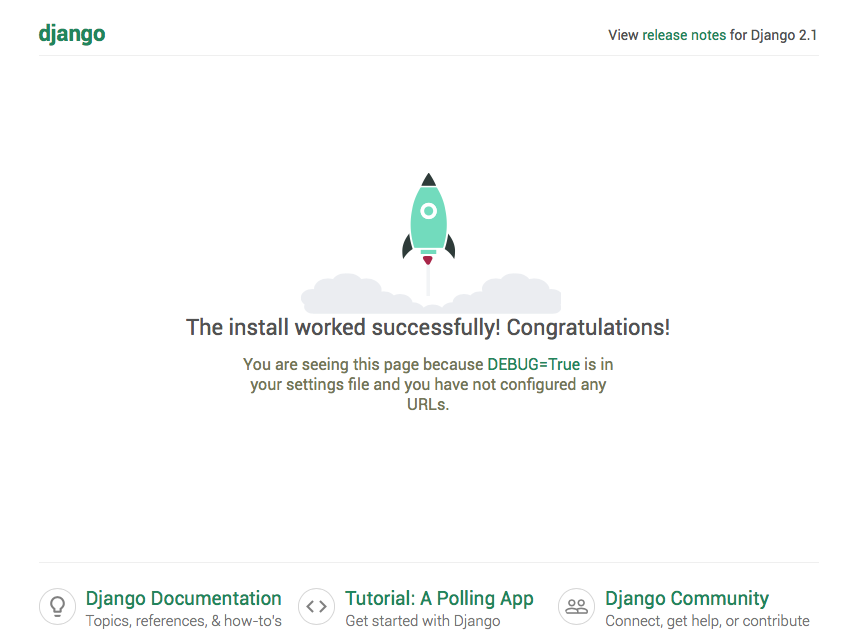
Teaspiller was a US-based web application for customers to find accountants and hire them to do their taxes and accounting online. In 2013 the company was acquired by Intuit, Inc and added to its TurboTax product line. The Teaspiller employees and code were all acquired and the product was renamed as "TurboTax CPA select". It enabled accountants to work remotely with clients (share files, send secure messages, schedule appointments), as well as find new clients looking for their specific skills through a complex search algorithm. This was done through extended profiles containing licensing information, professional histories, user ratings, peer endorsements, association memberships, and practice areas. The service had been called an H&R Block killer by Business Insider as it helped customers find accountants to prepare tax returns online. As of 2011 it had 20,000 US accountants listed on the site. The application was built using the Django framework. == History == Teaspiller was built by Vemdara, LLC, a web company based in New York and founded in 2009 by Amit Vemuri (a former VP at Travelocity). The web application was launched in 2010. In 2013 the company was acquired by Intuit as part of their TurboTax product line and renamed as "TurboTax CPA select".
Rclone
Rclone is an open source, multi threaded, command line computer program to manage or migrate content on cloud and other high latency storage. Its capabilities include sync, transfer, crypt, cache, union, compress and mount. The rclone website lists supported backends including S3 and Google Drive. Descriptions of rclone often carry the strapline "Rclone syncs your files to cloud storage". Those prior to 2020 include the alternative "Rsync for Cloud Storage". Rclone is well known for its rclone sync and rclone mount commands. It provides further management functions analogous to those ordinarily used for files on local disks, but which tolerate some intermittent and unreliable service. Rclone is commonly used with media servers such as Plex, Emby or Jellyfin to stream content direct from consumer file storage services. Official Ubuntu, Debian, Fedora, Gentoo, Arch, Brew, Chocolatey, and other package managers include rclone. == History == Nick Craig-Wood was inspired by rsync. Concerns about the noise and power costs arising from home computer servers prompted him to embrace cloud storage and he began developing rclone as open source software in 2012 under the name swiftsync. Rclone was promoted to stable version 1.00 in July 2014. In May 2017, Amazon Drive barred new users of rclone and other upload utilities, citing security concerns. Amazon Drive had been advertised as offering unlimited storage for £55 per year. Amazon's AWS S3 service continues to support new rclone users. The original rclone logo was updated in September 2018. In March 2020, Nick Craig-Wood resigned from Memset Ltd, a cloud hosting company he founded, to focus on open source software. Amazon's AWS April 2020 public sector blog explained how the Fred Hutch Cancer Research Center were using rclone in their Motuz tool to migrate very large biomedical research datasets in and out of AWS S3 object stores. In November 2020, rclone was updated to correct a weakness in the way it generated passwords. Passwords for encrypted remotes can be generated randomly by rclone or supplied by the user. In all versions of rclone from 1.49.0 to 1.53.2 the seed value for generated passwords was based on the number of seconds elapsed in the day, and therefore not truly random. CVE-2020-28924 recommended users upgrade to the latest version of rclone and check the passwords protecting their encrypted remotes. Release 1.55 of rclone in March 2021 included features sponsored by CERN and their CS3MESH4EOSC project. The work was EU funded to promote vendor-neutral application programming interfaces and protocols for synchronisation and sharing of academic data on cloud storage. == Backends and commands == Rclone supports the following services as backends. There are others, built on standard protocols such as WebDAV or S3, that work. WebDAV backends do not support rclone functionality dependent on server side checksum or modtime. Remotes are usually defined interactively from these backends, local disk, or memory (as S3), with rclone config. Rclone can further wrap those remotes with one or more of alias, chunk, compress, crypt or union, remotes. Once defined, the remotes are referenced by other rclone commands interchangeably with the local drive. Remote names are followed by a colon to distinguish them from local drives. For example, a remote example_remote containing a folder, or pseudofolder, myfolder is referred to within a command as a path example_remote:/myfolder. Rclone commands directly apply to remotes, or mount them for file access or streaming. With appropriate cache options the mount can be addressed as if a conventional, block level disk. Commands are provided to serve remotes over SFTP, HTTP, WebDAV, FTP and DLNA. Commands can have sub-commands and flags. Filters determine which files on a remote that rclone commands are applied to. rclone rc passes commands or new parameters to existing rclone sessions and has an experimental web browser interface. === Crypt remotes === Rclone's crypt implements encryption of files at rest in cloud storage. It layers an encrypted remote over a pre-existing, cloud or other remote. Crypt is commonly used to encrypt / decrypt media, for streaming, on consumer storage services such as Google Drive. Rclone's configuration file contains the crypt password. The password can be lightly obfuscated, or the whole rclone.conf file can be encrypted. Crypt can either encrypt file content and name, or additionally full paths. In the latter case there is a potential clash with encryption for cloud backends, such as Microsoft OneDrive, having limited path lengths. Crypt remotes do not encrypt object modification time or size. The encryption mechanism for content, name and path is available, for scrutiny, on the rclone website. Key derivation is with scrypt. === Example syntax (Linux) === These examples describe paths and file names but object keys behave similarly. To recursively copy files from directory remote_stuff, at the remote xmpl, to directory stuff in the home folder:- -v enables logging and -P, progress information. By default rclone checks the file integrity (hash) after copy; can retry each file up to three times if the operation is interrupted; uses up to four parallel transfer threads, and does not apply bandwidth throttling. Running the above command again copies any new or changed files at the remote to the local folder but, like default rsync behaviour, will not delete from the local directory, files which have been removed from the remote. To additionally delete files from the local folder which have been removed from the remote - more like the behaviour of rsync with a --delete flag:- And to delete files from the source after they have been transferred to the local directory - more like the behaviour of rsync with a --remove-source-file flag:- To mount the remote directory at a mountpoint in the pre-existing, empty stuff directory in the home directory (the ampersand at the end makes the mount command run as a background process):- Default rclone syntax can be modified. Alternative transfer, filter, conflict and backend specific flags are available. Performance choices include number of concurrent transfer threads; chunk size; bandwidth limit profiling, and cache aggression. == Academic evaluation == In 2018, University of Kentucky researchers published a conference paper comparing use of rclone and other command line, cloud data transfer agents for big data. The paper was published as a result of funding by the National Science Foundation. Later that year, University of Utah's Center for High Performance Computing examined the impact of rclone options on data transfer rates. == Rclone use at HPC research sites == Examples are University of Maryland, Iowa State University, Trinity College Dublin, NYU, BYU, Indiana University, CSC Finland, Utrecht University, University of Nebraska, University of Utah, North Carolina State University, Stony Brook, Tulane University, Washington State University, Georgia Tech, National Institutes of Health, Wharton, Yale, Harvard, Minnesota, Michigan State, Case Western Reserve University, University of South Dakota, Northern Arizona University, University of Pennsylvania, Stanford, University of Southern California, UC Santa Barbara, UC Irvine, UC Berkeley, and SURFnet. == Rclone and cybercrime == May 2020 reports stated rclone had been used by hackers to exploit Diebold Nixdorf ATMs with ProLock ransomware. The FBI issued a Flash Alert MI-000125-MW on May 4, 2020, in relation to the compromise. They issued a further, related alert 20200901–001 in September 2020. Attackers had exfiltrated / encrypted data from organisations involved in healthcare, construction, finance, and legal services. Multiple US government agencies, and industrial entities were affected. Researchers established the hackers spent about a month exploring the breached networks, using rclone to archive stolen data to cloud storage, before encrypting the target system. Reported targets included LaSalle County, and the city of Novi Sad. The FBI warned January 2021, in Private Industry Notification 20210106–001, of extortion activity using Egregor ransomware and rclone. Organisations worldwide had been threatened with public release of exfiltrated data. In some cases rclone had been disguised under the name svchost. Bookseller Barnes & Noble, US retailer Kmart, games developer Ubisoft and the Vancouver metro system have been reported as victims. An April 2021, cybersecurity investigation into SonicWall VPN zero-day vulnerability SNWLID-2021-0001 by FireEye's Mandiant team established attackers UNC2447 used rclone for reconnaissance and exfiltration of victims' files. Cybersecurity and Infrastructure Security Agency Analysis Report AR21-126A confirmed this use of rclone in FiveHands ransomware attacks. A June 2021, Microsoft Security Intelligence Twitter post identified use of rclone in BazaCall cyber attacks. The attackers sent emails e
Prompt engineering
Prompt engineering is the process of structuring natural language inputs (known as prompts) to produce specified outputs from a generative artificial intelligence (GenAI) model. Context engineering is the related area of software engineering that focuses on the management of non-prompt contexts supplied to the GenAI model, such as metadata, API tools, and tokens. It can also be defined as the practice of designing and refining input instructions given to a generative AI model to produce more accurate, relevant, or useful outputs. Effective prompt engineering involves understanding how a model interprets language, and may include techniques such as few-shot prompting, chain-of-thought prompting, and role assignment. It is increasingly considered a skill for working with large language models (LLMs) in both research and professional contexts. During the 2020s AI boom, prompt engineering became regarded as a business capability across corporations and industries. Employees with the title prompt engineer were hired to create prompts that would increase productivity and efficacy, although the individual title has since lost traction amid AI models that produce better prompts than humans and corporate training in prompting for general employees. Common prompting techniques include multi-shot, chain-of-thought, and tree-of-thought prompting, as well as the use of assigning roles to the model. Automated prompt generation methods, such as retrieval-augmented generation (RAG), provide for greater accuracy and a wider scope of functions for prompt engineers. Prompt injection is a type of cybersecurity attack that targets machine learning models through malicious prompts. == Terminology == The Oxford English Dictionary defines prompt engineering as "The action or process of formulating and refining prompts for an artificial intelligence program, algorithm, etc., in order to optimize its output or to achieve a desired outcome; the discipline or profession concerned with this." In 2023, prompt ("an instruction given to an artificial intelligence program, algorithm, etc., which determines or influences the content it generates") was the runner-up to Oxford's word of the year. === Prompt === A prompt is some natural language text that describes and prescribes the task that an artificial intelligence (AI) should perform. A prompt for a text-to-text language model can be a query, a command, or a longer statement referencing context, instructions, and conversation history. The process of prompt engineering may involve designing clear queries, refining wording, providing relevant context, specifying the style of output, and assigning a character for the AI to mimic in order to guide the model toward more accurate, useful, and consistent responses. When communicating with a text-to-image or a text-to-audio model, a typical prompt contains a description of a desired output such as "a high-quality photo of an astronaut riding a horse" or "Lo-fi slow BPM electro chill with organic samples". Prompt engineering may be applied to text-to-image models to achieve a desired subject, style, layout, lighting, and aesthetic. === Techniques === Common terms used to describe various specific prompt engineering techniques include chain-of-thought, tree-of-thought, and retrieval-augmented generation (RAG). A 2024 survey of the field identified over 50 distinct text-based prompting techniques, 40 multimodal variants, and a vocabulary of 33 terms used across prompting research, highlighting a present lack of standardised terminology for prompt engineering. Vibe coding is an AI-assisted software development method where a user prompts an LLM with a description of what they want and lets it generate or edit the code. In 2025, "vibe coding" was the Collins Dictionary word of the year. === Context engineering === Context engineering is a related process that focuses on the context elements that accompany user prompts, which include system instructions, retrieved knowledge, tool definitions, conversation summaries, and task metadata. Context engineering is performed to improve reliability, provenance and token efficiency in production LLM systems. The concept emphasises operational practices such as token budgeting, provenance tags, versioning of context artifacts, observability (logging which context was supplied), and context regression tests to ensure that changes to supplied context do not silently alter system behaviour. == Rationale == Research has found that the performance of large language models (LLMs) is highly sensitive to choices such as the ordering of examples, the quality of demonstration labels, and even small variations in phrasing. In some cases, reordering examples in a prompt produced accuracy shifts of more than 40 percent. === In-context learning === A model's ability to temporarily learn from prompts is known as in-context learning. In-context learning is an emergent ability of large language models. It is an emergent property of model scale, meaning that breaks in scaling laws occur, leading to its efficacy increasing at a different rate in larger models than in smaller models. Unlike training and fine-tuning, which produce lasting changes, in-context learning is temporary. Training models to perform in-context learning can be viewed as a form of meta-learning, or "learning to learn". === Prompting to estimate model sensitivity === Research consistently demonstrates that LLMs are highly sensitive to subtle variations in prompt formatting, structure, and linguistic properties. Some studies have shown up to 76 accuracy points across formatting changes in few-shot settings. Linguistic features significantly influence prompt effectiveness—such as morphology, syntax, and lexico-semantic changes—which meaningfully enhance task performance across a variety of tasks. Clausal syntax, for example, improves consistency and reduces uncertainty in knowledge retrieval. This sensitivity persists even with larger model sizes, additional few-shot examples, or instruction tuning. To address sensitivity of models and make them more robust, several evaluative methods have been proposed. FormatSpread facilitates systematic analysis by evaluating a range of plausible prompt formats, offering a more comprehensive performance interval. Similarly, PromptEval estimates performance distributions across diverse prompts, enabling robust metrics such as performance quantiles and accurate evaluations under constrained budgets. == Prompting techniques == === Multi-shot === A prompt may include a few examples for a model to learn from in context, an approach called few-shot learning. For example, the prompt may ask the model to complete "maison → house, chat → cat, chien →", with the expected response being dog. === Chain-of-thought === Chain-of-thought (CoT) prompting is a technique that allows large language models (LLMs) to solve a problem as a series of intermediate steps before giving a final answer. In 2022, Google Brain reported that chain-of-thought prompting improves reasoning ability by inducing the model to answer a multi-step problem with steps of reasoning that mimic a train of thought. Chain-of-thought techniques were developed to help LLMs handle multi-step reasoning tasks, such as arithmetic or commonsense reasoning questions. When applied to PaLM, a 540 billion parameter language model, according to Google, CoT prompting significantly aided the model, allowing it to perform comparably with task-specific fine-tuned models on several tasks, achieving state-of-the-art results at the time on the GSM8K mathematical reasoning benchmark. It is possible to fine-tune models on CoT reasoning datasets to enhance this capability further and stimulate better interpretability. As originally proposed by Google, each CoT prompt is accompanied by a set of input/output examples—called exemplars—to demonstrate the desired model output, making it a few-shot prompting technique. However, according to a later paper from researchers at Google and the University of Tokyo, simply appending the words "Let's think step-by-step" was also effective, which allowed for CoT to be employed as a zero-shot technique. ==== Self-consistency ==== Self-consistency performs several chain-of-thought rollouts, then selects the most commonly reached conclusion out of all the rollouts. === Tree-of-thought === Tree-of-thought prompting generalizes chain-of-thought by generating multiple lines of reasoning in parallel, with the ability to backtrack or explore other paths. It can use tree search algorithms like breadth-first, depth-first, or beam. === Text-to-image prompting === In 2022, text-to-image models like DALL-E 2, Stable Diffusion, and Midjourney were released to the public. These models take text prompts as input and use them to generate images. Early text-to-image models typically do not understand negation, grammar and sentence structure in the same way as large language models, and may thus requi
Tabletopia
Tabletopia is an online portal for users to play and create virtual tabletop games. The platform is developed by Tabletopia Inc and initially was released as a web browser based service after a successful crowdfunding campaign in August 2015. In December 2016 Tabletopia was released on Steam, and later in 2018 became available in AppStore and Google Play. == Gameplay == Tabletopia is a sandbox system for running any game. That means no AI or rules enforcement. Participating players will have to know how to play the game. Nevertheless, the platform has some automated actions available, like card-shuffling and dealing, dice-rolling, magnetic placement of components in special zones, hand management, and some others. Tabletopia also features ready game setups for various player numbers to facilitate gameplay. It also has customisable camera controls which let players save camera positions and switch between them using hot keys. People can use the Game Designer mode to design and create their own board games using the component library. They can then monetise the games with a 70/30 split to the game designer. == Development == Tabletopia was created in early 2014, by Tim Bokarev and his partners Artem Zinoviev and Dmitry Sergeev. These co-founders already had experience in the video and board games industry. Their other projects include Promo Interactive, an internet advertising agency, Playtox, a mobile MMORPG, Igrology, a game studio, and Tesera.ru, the main Russian-speaking board gaming portal. By Spring 2014, Artem, Dmitry and Tim created Tabletopia Inc. USA and started development. Tabletopia is a multinational crew that includes professionals from USA, Ukraine, Australia, Ireland, and Germany. The Kickstarter campaign in August 2015 earned $133,721 by 2,545 backers. Tabletopia received Green Light on Steam in September 2015 and was released on Steam in March 2016. The platform remained in Early Access until December 2016, when it was officially released on Steam and on the web. In February 2018 it was released as a stand-alone app for iOS tablets, and in September 2018 for Android tablets.