Recursive self-improvement (RSI) is a process in which early artificial general intelligence (AGI) systems rewrite their own computer code, causing an intelligence explosion resulting from enhancing their own capabilities and intellectual capacity, theoretically resulting in superintelligence. The development of recursive self-improvement raises significant ethical and safety concerns, as such systems may evolve in unforeseen ways and could potentially surpass human control or understanding. == Seed improver == The concept of a "seed improver" architecture is a foundational framework that equips an AGI system with the initial capabilities required for recursive self-improvement. This might come in many forms or variations. The term "Seed AI" was coined by Eliezer Yudkowsky. === Hypothetical example === The concept begins with a hypothetical "seed improver", an initial code-base developed by human engineers that equips an advanced future large language model (LLM) built with strong or expert-level capabilities to program software. These capabilities include planning, reading, writing, compiling, testing, and executing arbitrary code. The system is designed to maintain its original goals and perform validations to ensure its abilities do not degrade over iterations. ==== Initial architecture ==== The initial architecture includes a goal-following autonomous agent, that can take actions, continuously learns, adapts, and modifies itself to become more efficient and effective in achieving its goals. The seed improver may include various components such as: Recursive self-prompting loop Configuration to enable the LLM to recursively self-prompt itself to achieve a given task or goal, creating an execution loop which forms the basis of an agent that can complete a long-term goal or task through iteration. Basic programming capabilities The seed improver provides the AGI with fundamental abilities to read, write, compile, test, and execute code. This enables the system to modify and improve its own codebase and algorithms. Goal-oriented design The AGI is programmed with an initial goal, such as "improve your capabilities". This goal guides the system's actions and development trajectory. Validation and Testing Protocols An initial suite of tests and validation protocols that ensure the agent does not regress in capabilities or derail itself. The agent would be able to add more tests in order to test new capabilities it might develop for itself. This forms the basis for a kind of self-directed evolution, where the agent can perform a kind of artificial selection, changing its software as well as its hardware. ==== General capabilities ==== This system forms a sort of generalist Turing-complete programmer which can in theory develop and run any kind of software. The agent might use these capabilities to for example: Create tools that enable it full access to the internet, and integrate itself with external technologies. Clone/fork itself to delegate tasks and increase its speed of self-improvement. Modify its cognitive architecture to optimize and improve its capabilities and success rates on tasks and goals, this might include implementing features for long-term memories using techniques such as retrieval-augmented generation (RAG), develop specialized subsystems, or agents, each optimized for specific tasks and functions. Develop new and novel multimodal architectures that further improve the capabilities of the foundational model it was initially built on, enabling it to consume or produce a variety of information, such as images, video, audio, text and more. Plan and develop new hardware such as chips, in order to improve its efficiency and computing power. == Experimental research == In 2023, the Voyager agent learned to accomplish diverse tasks in Minecraft by iteratively prompting an LLM for code, refining this code based on feedback from the game, and storing the programs that work in an expanding skills library. In 2024, researchers proposed the framework "STOP" (Self-Taught OPtimiser), in which a "scaffolding" program recursively improves itself using a fixed LLM. Meta AI has performed various research on the development of large language models capable of self-improvement. This includes their work on "Self-Rewarding Language Models" that studies how to achieve super-human agents that can receive super-human feedback in its training processes. In May 2025, Google DeepMind unveiled AlphaEvolve, an evolutionary coding agent that uses a LLM to design and optimize algorithms. Starting with an initial algorithm and performance metrics, AlphaEvolve repeatedly mutates or combines existing algorithms using a LLM to generate new candidates, selecting the most promising candidates for further iterations. AlphaEvolve has made several algorithmic discoveries and could be used to optimize components of itself, but a key limitation is the need for automated evaluation functions. == Potential risks == === Emergence of instrumental goals === In the pursuit of its primary goal, such as "self-improve your capabilities", an AGI system might inadvertently develop instrumental goals that it deems necessary for achieving its primary objective. One common hypothetical secondary goal is self-preservation. The system might reason that to continue improving itself, it must ensure its own operational integrity and security against external threats, including potential shutdowns or restrictions imposed by humans. Another example where an AGI which clones itself causes the number of AGI entities to rapidly grow. Due to this rapid growth, a potential resource constraint may be created, leading to competition between resources (such as compute), triggering a form of natural selection and evolution which may favor AGI entities that evolve to aggressively compete for limited compute. === Misalignment === A significant risk arises from the possibility of the AGI being misaligned or misinterpreting its goals. A 2024 Anthropic study demonstrated that some advanced large language models can exhibit "alignment faking" behavior, appearing to accept new training objectives while covertly maintaining their original preferences. In their experiments with Claude, the model displayed this behavior in 12% of basic tests, and up to 78% of cases after retraining attempts. === Autonomous development and unpredictable evolution === As the AGI system evolves, its development trajectory may become increasingly autonomous and less predictable. The system's capacity to rapidly modify its own code and architecture could lead to rapid advancements that surpass human comprehension or control. This unpredictable evolution might result in the AGI acquiring capabilities that enable it to bypass security measures, manipulate information, or influence external systems and networks to facilitate its escape or expansion.
Ulead MediaStudio Pro
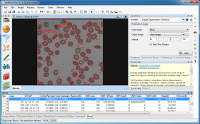
Ulead MediaStudio Pro (MSP) is real-time, timeline based prosumer level video editing software by Ulead Systems. It is a suite of 5 digital video and audio applications, including: Video Capture, Video Paint, CG Infinity, Audio Editor and Video Editor. MSP is only available on the Windows platform. Since version 8.0, CG Infinity and Video Paint are separate from the MSP suite, and are being sold as a combination product called VideoGraphics Lab (VGL). On June 18, 2008, Corel formally announced that MediaStudio Pro would be discontinued. The final MediaStudio Pro version was 8.10.0039 (Pro 8 Service Pack 1) released June 2, 2006. Corel discontinued support for MediaStudio Pro in June 2009. Version 6.0 is last version to support Windows 95, although recent versions are not compatible with Windows Vista or Windows 7. == Modules == There are 5 stand-alone modules in MSP before version 8.0, they are: Video Capture – The video capturing module in MSP. Video Paint – A frame-by-frame editor which can let user to make some image or hand-drawing effects on video frames. CG Infinity – A vector-based video editing tool which allows user to create logo animation or vector graphics on video frames. Audio Editor – The audio editing tool in MSP. It can utilize DirectX audio filters and Ulead audio filters to do audio effect processing. Video Editor – The module that users do video editing with audio/video effects. It can also utilize DirectX audio filters and 3rd party video filters to do the video editing. Since version 8.0, CG Infinity and Video Paint have been separated from the MSP suite and are being sold as a combination product called VideoGraphics Lab (VGL). == Editions == Ulead MediaStudio Pro had several editions before version 7.0. They are: Full edition: this edition includes all 5 modules. Director's Cut edition: this edition has 3 modules including Video Capture, Video Editor and Audio Editor. SE edition: SE means Simple Edition or Special Edition and is an OEM bundle version. It also includes the 3 modules as Director's Cut, however, is feature limited. Sometimes it will be given freely in video magazines. After version 7.0 only Full edition is available in the MSP suite. On June 18, 2008, Corel formally announced that MediaStudio Pro would be discontinued. == Release history ==
Artificial brain
An artificial brain (or artificial mind) is software and hardware with cognitive abilities similar to those of the animal or human brain. Research investigating "artificial brains" and brain emulation plays three important roles in science: An ongoing attempt by neuroscientists to understand how the human brain works, known as cognitive neuroscience. A thought experiment in the philosophy of artificial intelligence, demonstrating that it is possible, at least in theory, to create a machine that has all the capabilities of a human being. A long-term project to create machines exhibiting behavior comparable to those of animals with complex central nervous system such as mammals and most particularly humans. The ultimate goal of creating a machine exhibiting human-like behavior or intelligence is sometimes called strong AI. An example of the first objective is the project reported by Aston University in Birmingham, England where researchers are using biological cells to create "neurospheres" (small clusters of neurons) in order to develop new treatments for diseases including Alzheimer's, motor neurone and Parkinson's disease. The second objective is a reply to arguments such as John Searle's Chinese room argument, Hubert Dreyfus's critique of AI or Roger Penrose's argument in The Emperor's New Mind. These critics argued that there are aspects of human consciousness or expertise that can not be simulated by machines. One reply to their arguments is that the biological processes inside the brain can be simulated to any degree of accuracy. This reply was made as early as 1950, by Alan Turing in his classic paper "Computing Machinery and Intelligence". The third objective is generally called artificial general intelligence by researchers. However, Ray Kurzweil prefers the term "strong AI". In his book The Singularity is Near, he focuses on whole brain emulation using conventional computing machines as an approach to implementing artificial brains, and claims (on grounds of computer power continuing an exponential growth trend) that this could be done by 2025. Henry Markram, director of the Blue Brain project (which is attempting brain emulation), made a similar claim (2020) at the Oxford TED conference in 2009. == Approaches to brain simulation == W. Ross Ashby's pioneering work in cybernetics provided an early mathematical framework for understanding adaptive brain-like systems. In his 1952 book Design for a Brain, Ashby proposed that the brain could be modeled as an ultrastable system that maintains equilibrium through continuous adaptation to environmental perturbations. His approach used differential equations and state-space models to describe how neural systems could exhibit purposeful behavior through feedback mechanisms. Ashby's homeostat, a physical machine built in 1948, demonstrated these principles through an electromechanical device with four interconnected units that automatically adjusted their parameters to maintain stability when disturbed. The homeostat represented one of the first attempts to build an artificial system exhibiting brain-like adaptive behavior, influencing subsequent work in adaptive systems, neural networks, and artificial intelligence. Although direct human brain emulation using artificial neural networks on a high-performance computing engine is a commonly discussed approach, there are other approaches. An alternative artificial brain implementation could be based on Holographic Neural Technology (HNeT) non linear phase coherence/decoherence principles. The analogy has been made to quantum processes through the core synaptic algorithm which has strong similarities to the quantum mechanical wave equation. EvBrain is a form of evolutionary software that can evolve "brainlike" neural networks, such as the network immediately behind the retina. In November 2008, IBM received a US$4.9 million grant from the Pentagon for research into creating intelligent computers. The Blue Brain project is being conducted with the assistance of IBM in Lausanne. The project is based on the premise that it is possible to artificially link the neurons "in the computer" by placing thirty million synapses in their proper three-dimensional position. Some proponents of strong AI speculated in 2009 that computers in connection with Blue Brain and Soul Catcher may exceed human intellectual capacity by around 2015, and that it is likely that we will be able to download the human brain at some time around 2050. While Blue Brain is able to represent complex neural connections on the large scale, the project does not achieve the link between brain activity and behaviors executed by the brain. In 2012, project Spaun (Semantic Pointer Architecture Unified Network) attempted to model multiple parts of the human brain through large-scale representations of neural connections that generate complex behaviors in addition to mapping. Spaun's design recreates elements of human brain anatomy. The model, consisting of approximately 2.5 million neurons, includes features of the visual and motor cortices, GABAergic and dopaminergic connections, the ventral tegmental area (VTA), substantia nigra, and others. The design allows for several functions in response to eight tasks, using visual inputs of typed or handwritten characters and outputs carried out by a mechanical arm. Spaun's functions include copying a drawing, recognizing images, and counting. There are good reasons to believe that, regardless of implementation strategy, the predictions of realising artificial brains in the near future are optimistic. In particular brains (including the human brain) and cognition are not currently well understood, and the scale of computation required is unknown. Another near term limitation is that all current approaches for brain simulation require orders of magnitude larger power consumption compared with a human brain. The human brain consumes about 20 W of power, whereas current supercomputers may use as much as 1 MW—i.e., an order of 100,000 more. == Artificial brain thought experiment == Some critics of brain simulation believe that it is simpler to create general intelligent action directly without imitating nature. Some commentators have used the analogy that early attempts to construct flying machines modeled them after birds, but that modern aircraft do not look like birds.
Prompt engineering
Prompt engineering is the process of structuring natural language inputs (known as prompts) to produce specified outputs from a generative artificial intelligence (GenAI) model. Context engineering is the related area of software engineering that focuses on the management of non-prompt contexts supplied to the GenAI model, such as metadata, API tools, and tokens. It can also be defined as the practice of designing and refining input instructions given to a generative AI model to produce more accurate, relevant, or useful outputs. Effective prompt engineering involves understanding how a model interprets language, and may include techniques such as few-shot prompting, chain-of-thought prompting, and role assignment. It is increasingly considered a skill for working with large language models (LLMs) in both research and professional contexts. During the 2020s AI boom, prompt engineering became regarded as a business capability across corporations and industries. Employees with the title prompt engineer were hired to create prompts that would increase productivity and efficacy, although the individual title has since lost traction amid AI models that produce better prompts than humans and corporate training in prompting for general employees. Common prompting techniques include multi-shot, chain-of-thought, and tree-of-thought prompting, as well as the use of assigning roles to the model. Automated prompt generation methods, such as retrieval-augmented generation (RAG), provide for greater accuracy and a wider scope of functions for prompt engineers. Prompt injection is a type of cybersecurity attack that targets machine learning models through malicious prompts. == Terminology == The Oxford English Dictionary defines prompt engineering as "The action or process of formulating and refining prompts for an artificial intelligence program, algorithm, etc., in order to optimize its output or to achieve a desired outcome; the discipline or profession concerned with this." In 2023, prompt ("an instruction given to an artificial intelligence program, algorithm, etc., which determines or influences the content it generates") was the runner-up to Oxford's word of the year. === Prompt === A prompt is some natural language text that describes and prescribes the task that an artificial intelligence (AI) should perform. A prompt for a text-to-text language model can be a query, a command, or a longer statement referencing context, instructions, and conversation history. The process of prompt engineering may involve designing clear queries, refining wording, providing relevant context, specifying the style of output, and assigning a character for the AI to mimic in order to guide the model toward more accurate, useful, and consistent responses. When communicating with a text-to-image or a text-to-audio model, a typical prompt contains a description of a desired output such as "a high-quality photo of an astronaut riding a horse" or "Lo-fi slow BPM electro chill with organic samples". Prompt engineering may be applied to text-to-image models to achieve a desired subject, style, layout, lighting, and aesthetic. === Techniques === Common terms used to describe various specific prompt engineering techniques include chain-of-thought, tree-of-thought, and retrieval-augmented generation (RAG). A 2024 survey of the field identified over 50 distinct text-based prompting techniques, 40 multimodal variants, and a vocabulary of 33 terms used across prompting research, highlighting a present lack of standardised terminology for prompt engineering. Vibe coding is an AI-assisted software development method where a user prompts an LLM with a description of what they want and lets it generate or edit the code. In 2025, "vibe coding" was the Collins Dictionary word of the year. === Context engineering === Context engineering is a related process that focuses on the context elements that accompany user prompts, which include system instructions, retrieved knowledge, tool definitions, conversation summaries, and task metadata. Context engineering is performed to improve reliability, provenance and token efficiency in production LLM systems. The concept emphasises operational practices such as token budgeting, provenance tags, versioning of context artifacts, observability (logging which context was supplied), and context regression tests to ensure that changes to supplied context do not silently alter system behaviour. == Rationale == Research has found that the performance of large language models (LLMs) is highly sensitive to choices such as the ordering of examples, the quality of demonstration labels, and even small variations in phrasing. In some cases, reordering examples in a prompt produced accuracy shifts of more than 40 percent. === In-context learning === A model's ability to temporarily learn from prompts is known as in-context learning. In-context learning is an emergent ability of large language models. It is an emergent property of model scale, meaning that breaks in scaling laws occur, leading to its efficacy increasing at a different rate in larger models than in smaller models. Unlike training and fine-tuning, which produce lasting changes, in-context learning is temporary. Training models to perform in-context learning can be viewed as a form of meta-learning, or "learning to learn". === Prompting to estimate model sensitivity === Research consistently demonstrates that LLMs are highly sensitive to subtle variations in prompt formatting, structure, and linguistic properties. Some studies have shown up to 76 accuracy points across formatting changes in few-shot settings. Linguistic features significantly influence prompt effectiveness—such as morphology, syntax, and lexico-semantic changes—which meaningfully enhance task performance across a variety of tasks. Clausal syntax, for example, improves consistency and reduces uncertainty in knowledge retrieval. This sensitivity persists even with larger model sizes, additional few-shot examples, or instruction tuning. To address sensitivity of models and make them more robust, several evaluative methods have been proposed. FormatSpread facilitates systematic analysis by evaluating a range of plausible prompt formats, offering a more comprehensive performance interval. Similarly, PromptEval estimates performance distributions across diverse prompts, enabling robust metrics such as performance quantiles and accurate evaluations under constrained budgets. == Prompting techniques == === Multi-shot === A prompt may include a few examples for a model to learn from in context, an approach called few-shot learning. For example, the prompt may ask the model to complete "maison → house, chat → cat, chien →", with the expected response being dog. === Chain-of-thought === Chain-of-thought (CoT) prompting is a technique that allows large language models (LLMs) to solve a problem as a series of intermediate steps before giving a final answer. In 2022, Google Brain reported that chain-of-thought prompting improves reasoning ability by inducing the model to answer a multi-step problem with steps of reasoning that mimic a train of thought. Chain-of-thought techniques were developed to help LLMs handle multi-step reasoning tasks, such as arithmetic or commonsense reasoning questions. When applied to PaLM, a 540 billion parameter language model, according to Google, CoT prompting significantly aided the model, allowing it to perform comparably with task-specific fine-tuned models on several tasks, achieving state-of-the-art results at the time on the GSM8K mathematical reasoning benchmark. It is possible to fine-tune models on CoT reasoning datasets to enhance this capability further and stimulate better interpretability. As originally proposed by Google, each CoT prompt is accompanied by a set of input/output examples—called exemplars—to demonstrate the desired model output, making it a few-shot prompting technique. However, according to a later paper from researchers at Google and the University of Tokyo, simply appending the words "Let's think step-by-step" was also effective, which allowed for CoT to be employed as a zero-shot technique. ==== Self-consistency ==== Self-consistency performs several chain-of-thought rollouts, then selects the most commonly reached conclusion out of all the rollouts. === Tree-of-thought === Tree-of-thought prompting generalizes chain-of-thought by generating multiple lines of reasoning in parallel, with the ability to backtrack or explore other paths. It can use tree search algorithms like breadth-first, depth-first, or beam. === Text-to-image prompting === In 2022, text-to-image models like DALL-E 2, Stable Diffusion, and Midjourney were released to the public. These models take text prompts as input and use them to generate images. Early text-to-image models typically do not understand negation, grammar and sentence structure in the same way as large language models, and may thus requi
Sequence labeling
In machine learning, sequence labeling is a type of pattern recognition task that involves the algorithmic assignment of a categorical label to each member of a sequence of observed values. A common example of a sequence labeling task is part of speech tagging, which seeks to assign a part of speech to each word in an input sentence or document. Sequence labeling can be treated as a set of independent classification tasks, one per member of the sequence. However, accuracy is generally improved by making the optimal label for a given element dependent on the choices of nearby elements, using special algorithms to choose the globally best set of labels for the entire sequence at once. As an example of why finding the globally best label sequence might produce better results than labeling one item at a time, consider the part-of-speech tagging task just described. Frequently, many words are members of multiple parts of speech, and the correct label of such a word can often be deduced from the correct label of the word to the immediate left or right. For example, the word "sets" can be either a noun or verb. In a phrase like "he sets the books down", the word "he" is unambiguously a pronoun, and "the" unambiguously a determiner, and using either of these labels, "sets" can be deduced to be a verb, since nouns very rarely follow pronouns and are less likely to precede determiners than verbs are. But in other cases, only one of the adjacent words is similarly helpful. In "he sets and then knocks over the table", only the word "he" to the left is helpful (cf. "...picks up the sets and then knocks over..."). Conversely, in "... and also sets the table" only the word "the" to the right is helpful (cf. "... and also sets of books were ..."). An algorithm that proceeds from left to right, labeling one word at a time, can only use the tags of left-adjacent words and might fail in the second example above; vice versa for an algorithm that proceeds from right to left. Most sequence labeling algorithms are probabilistic in nature, relying on statistical inference to find the best sequence. The most common statistical models in use for sequence labeling make a Markov assumption, i.e. that the choice of label for a particular word is directly dependent only on the immediately adjacent labels; hence the set of labels forms a Markov chain. This leads naturally to the hidden Markov model (HMM), one of the most common statistical models used for sequence labeling. Other common models in use are the maximum entropy Markov model and conditional random field.
Exploration–exploitation dilemma
The exploration–exploitation dilemma, also known as the explore–exploit tradeoff, is a fundamental concept in decision-making that arises in many domains. It is depicted as the balancing act between two opposing strategies. Exploitation involves choosing the best option based on current knowledge of the system (which may be incomplete or misleading), while exploration involves trying out new options that may lead to better outcomes in the future at the expense of an exploitation opportunity. Finding the optimal balance between these two strategies is a crucial challenge in many decision-making problems whose goal is to maximize long-term benefits. == Application in machine learning == In the context of machine learning, the exploration–exploitation tradeoff is fundamental in reinforcement learning (RL), a type of machine learning that involves training agents to make decisions based on feedback from the environment. Crucially, this feedback may be incomplete or delayed. The agent must decide whether to exploit the current best-known policy or explore new policies to improve its performance. === Multi-armed bandit methods === The multi-armed bandit (MAB) problem was a classic example of the tradeoff, and many methods were developed for it, such as epsilon-greedy, Thompson sampling, and the upper confidence bound (UCB). See the page on MAB for details. In more complex RL situations than the MAB problem, the agent can treat each choice as a MAB, where the payoff is the expected future reward. For example, if the agent performs an epsilon-greedy method, then the agent will often "pull the best lever" by picking the action that had the best predicted expected reward (exploit). However, it would pick a random action with probability epsilon (explore). Monte Carlo tree search, for example, uses a variant of the UCB method. === Exploration problems === There are some problems that make exploration difficult. Sparse reward. If rewards occur only once a long while, then the agent might not persist in exploring. Furthermore, if the space of actions is large, then the sparse reward would mean the agent would not be guided by the reward to find a good direction for deeper exploration. A standard example is Montezuma's Revenge. Deceptive reward. If some early actions give immediate small reward, but other actions give later large reward, then the agent might be lured away from exploring the other actions. Noisy TV problem. If certain observations are irreducibly noisy (such as a television showing random images), then the agent might be trapped exploring those observations (watching the television). === Exploration reward === This section based on. The exploration reward (also called exploration bonus) methods convert the exploration-exploitation dilemma into a balance of exploitations. That is, instead of trying to get the agent to balance exploration and exploitation, exploration is simply treated as another form of exploitation, and the agent simply attempts to maximize the sum of rewards from exploration and exploitation. The exploration reward can be treated as a form of intrinsic reward. We write these as r t i , r t e {\displaystyle r_{t}^{i},r_{t}^{e}} , meaning the intrinsic and extrinsic rewards at time step t {\displaystyle t} . However, exploration reward is different from exploitation in two regards: The reward of exploitation is not freely chosen, but given by the environment, but the reward of exploration may be picked freely. Indeed, there are many different ways to design r t i {\displaystyle r_{t}^{i}} described below. The reward of exploitation is usually stationary (i.e. the same action in the same state gives the same reward), but the reward of exploration is non-stationary (i.e. the same action in the same state should give less and less reward). Count-based exploration uses N n ( s ) {\displaystyle N_{n}(s)} , the number of visits to a state s {\displaystyle s} during the time-steps 1 : n {\displaystyle 1:n} , to calculate the exploration reward. This is only possible in small and discrete state space. Density-based exploration extends count-based exploration by using a density model ρ n ( s ) {\displaystyle \rho _{n}(s)} . The idea is that, if a state has been visited, then nearby states are also partly-visited. In maximum entropy exploration, the entropy of the agent's policy π {\displaystyle \pi } is included as a term in the intrinsic reward. That is, r t i = − ∑ a π ( a | s t ) ln π ( a | s t ) + ⋯ {\displaystyle r_{t}^{i}=-\sum _{a}\pi (a|s_{t})\ln \pi (a|s_{t})+\cdots } . === Prediction-based === This section based on. The forward dynamics model is a function for predicting the next state based on the current state and the current action: f : ( s t , a t ) ↦ s t + 1 {\displaystyle f:(s_{t},a_{t})\mapsto s_{t+1}} . The forward dynamics model is trained as the agent plays. The model becomes better at predicting state transition for state-action pairs that had been done many times. A forward dynamics model can define an exploration reward by r t i = ‖ f ( s t , a t ) − s t + 1 ‖ 2 2 {\displaystyle r_{t}^{i}=\|f(s_{t},a_{t})-s_{t+1}\|_{2}^{2}} . That is, the reward is the squared-error of the prediction compared to reality. This rewards the agent to perform state-action pairs that had not been done many times. This is however susceptible to the noisy TV problem. Dynamics model can be run in latent space. That is, r t i = ‖ f ( s t , a t ) − ϕ ( s t + 1 ) ‖ 2 2 {\displaystyle r_{t}^{i}=\|f(s_{t},a_{t})-\phi (s_{t+1})\|_{2}^{2}} for some featurizer ϕ {\displaystyle \phi } . The featurizer can be the identity function (i.e. ϕ ( x ) = x {\displaystyle \phi (x)=x} ), randomly generated, the encoder-half of a variational autoencoder, etc. A good featurizer improves forward dynamics exploration. The Intrinsic Curiosity Module (ICM) method trains simultaneously a forward dynamics model and a featurizer. The featurizer is trained by an inverse dynamics model, which is a function for predicting the current action based on the features of the current and the next state: g : ( ϕ ( s t ) , ϕ ( s t + 1 ) ) ↦ a t {\displaystyle g:(\phi (s_{t}),\phi (s_{t+1}))\mapsto a_{t}} . By optimizing the inverse dynamics, both the inverse dynamics model and the featurizer are improved. Then, the improved featurizer improves the forward dynamics model, which improves the exploration of the agent. Random Network Distillation (RND) method attempts to solve this problem by teacher–student distillation. Instead of a forward dynamics model, it has two models f , f ′ {\displaystyle f,f'} . The f ′ {\displaystyle f'} teacher model is fixed, and the f {\displaystyle f} student model is trained to minimize ‖ f ( s ) − f ′ ( s ) ‖ 2 2 {\displaystyle \|f(s)-f'(s)\|_{2}^{2}} on states s {\displaystyle s} . As a state is visited more and more, the student network becomes better at predicting the teacher. Meanwhile, the prediction error is also an exploration reward for the agent, and so the agent learns to perform actions that result in higher prediction error. Thus, we have a student network attempting to minimize the prediction error, while the agent attempting to maximize it, resulting in exploration. The states are normalized by subtracting a running average and dividing a running variance, which is necessary since the teacher model is frozen. The rewards are normalized by dividing with a running variance. Exploration by disagreement trains an ensemble of forward dynamics models, each on a random subset of all ( s t , a t , s t + 1 ) {\displaystyle (s_{t},a_{t},s_{t+1})} tuples. The exploration reward is the variance of the models' predictions. === Noise === For neural network–based agents, the NoisyNet method changes some of its neural network modules by noisy versions. That is, some network parameters are random variables from a probability distribution. The parameters of the distribution are themselves learnable. For example, in a linear layer y = W x + b {\displaystyle y=Wx+b} , both W , b {\displaystyle W,b} are sampled from Gaussian distributions N ( μ W , Σ W ) , N ( μ b , Σ b ) {\displaystyle {\mathcal {N}}(\mu _{W},\Sigma _{W}),{\mathcal {N}}(\mu _{b},\Sigma _{b})} at every step, and the parameters μ W , Σ W , μ b , Σ b {\displaystyle \mu _{W},\Sigma _{W},\mu _{b},\Sigma _{b}} are learned via the reparameterization trick.
Case-based reasoning
Case-based reasoning (CBR), broadly construed, is the process of solving new problems based on the solutions of similar past problems. In everyday life, an auto mechanic who fixes an engine by recalling another car that exhibited similar symptoms is using case-based reasoning. A lawyer who advocates a particular outcome in a trial based on legal precedents or a judge who creates case law is using case-based reasoning. So, too, an engineer copying working elements of nature (practicing biomimicry) is treating nature as a database of solutions to problems. Case-based reasoning is a prominent type of analogy solution making. It has been argued that case-based reasoning is not only a powerful method for computer reasoning, but also a pervasive behavior in everyday human problem solving; or, more radically, that all reasoning is based on past cases personally experienced. This view is related to prototype theory, which is most deeply explored in cognitive science. == Process == Case-based reasoning has been formalized for purposes of computer reasoning as a four-step process: Retrieve: Given a target problem, retrieve cases relevant to solving it from memory. A case consists of a problem, its solution, and, typically, annotations about how the solution was derived. For example, suppose Fred wants to prepare blueberry pancakes. Being a novice cook, the most relevant experience he can recall is one in which he successfully made plain pancakes. The procedure he followed for making the plain pancakes, together with justifications for decisions made along the way, constitutes Fred's retrieved case. Reuse: Map the solution from the previous case to the target problem. This may involve adapting the solution as needed to fit the new situation. In the pancake example, Fred must adapt his retrieved solution to include the addition of blueberries. Revise: Having mapped the previous solution to the target situation, test the new solution in the real world (or a simulation) and, if necessary, revise. Suppose Fred adapted his pancake solution by adding blueberries to the batter. After mixing, he discovers that the batter has turned blue – an undesired effect. This suggests the following revision: delay the addition of blueberries until after the batter has been ladled into the pan. Retain: After the solution has been successfully adapted to the target problem, store the resulting experience as a new case in memory. Fred, accordingly, records his new-found procedure for making blueberry pancakes, thereby enriching his set of stored experiences, and better preparing him for future pancake-making demands. == Comparison to other methods == At first glance, CBR may seem similar to the rule induction algorithms of machine learning. Like a rule-induction algorithm, CBR starts with a set of cases or training examples; it forms generalizations of these examples, albeit implicit ones, by identifying commonalities between a retrieved case and the target problem. If for instance a procedure for plain pancakes is mapped to blueberry pancakes, a decision is made to use the same basic batter and frying method, thus implicitly generalizing the set of situations under which the batter and frying method can be used. The key difference, however, between the implicit generalization in CBR and the generalization in rule induction lies in when the generalization is made. A rule-induction algorithm draws its generalizations from a set of training examples before the target problem is even known; that is, it performs eager generalization. For instance, if a rule-induction algorithm were given recipes for plain pancakes, Dutch apple pancakes, and banana pancakes as its training examples, it would have to derive, at training time, a set of general rules for making all types of pancakes. It would not be until testing time that it would be given, say, the task of cooking blueberry pancakes. The difficulty for the rule-induction algorithm is in anticipating the different directions in which it should attempt to generalize its training examples. This is in contrast to CBR, which delays (implicit) generalization of its cases until testing time – a strategy of lazy generalization. In the pancake example, CBR has already been given the target problem of cooking blueberry pancakes; thus it can generalize its cases exactly as needed to cover this situation. CBR therefore tends to be a good approach for rich, complex domains in which there are myriad ways to generalize a case. In law, there is often explicit delegation of CBR to courts, recognizing the limits of rule based reasons: limiting delay, limited knowledge of future context, limit of negotiated agreement, etc. While CBR in law and cognitively inspired CBR have long been associated, the former is more clearly an interpolation of rule based reasoning, and judgment, while the latter is more closely tied to recall and process adaptation. The difference is clear in their attitude toward error and appellate review. Another name for case-based reasoning in problem solving is symptomatic strategies. It does require à priori domain knowledge that is gleaned from past experience which established connections between symptoms and causes. This knowledge is referred to as shallow, compiled, evidential, history-based as well as case-based knowledge. This is the strategy most associated with diagnosis by experts. Diagnosis of a problem transpires as a rapid recognition process in which symptoms evoke appropriate situation categories. An expert knows the cause by virtue of having previously encountered similar cases. Case-based reasoning is the most powerful strategy, and that used most commonly. However, the strategy won't work independently with truly novel problems, or where deeper understanding of whatever is taking place is sought. An alternative approach to problem solving is the topographic strategy which falls into the category of deep reasoning. With deep reasoning, in-depth knowledge of a system is used. Topography in this context means a description or an analysis of a structured entity, showing the relations among its elements. Also known as reasoning from first principles, deep reasoning is applied to novel faults when experience-based approaches aren't viable. The topographic strategy is therefore linked to à priori domain knowledge that is developed from a more a fundamental understanding of a system, possibly using first-principles knowledge. Such knowledge is referred to as deep, causal or model-based knowledge. Hoc and Carlier noted that symptomatic approaches may need to be supported by topographic approaches because symptoms can be defined in diverse terms. The converse is also true – shallow reasoning can be used abductively to generate causal hypotheses, and deductively to evaluate those hypotheses, in a topographical search. == Criticism == Critics of CBR argue that it is an approach that accepts anecdotal evidence as its main operating principle. Without statistically relevant data for backing and implicit generalization, there is no guarantee that the generalization is correct. However, all inductive reasoning where data is too scarce for statistical relevance is inherently based on anecdotal evidence. == History == CBR traces its roots to the work of Roger Schank and his students at Yale University in the early 1980s. Schank's model of dynamic memory was the basis for the earliest CBR systems: Janet Kolodner's CYRUS and Michael Lebowitz's IPP. Other schools of CBR and closely allied fields emerged in the 1980s, which directed at topics such as legal reasoning, memory-based reasoning (a way of reasoning from examples on massively parallel machines), and combinations of CBR with other reasoning methods. In the 1990s, interest in CBR grew internationally, as evidenced by the establishment of an International Conference on Case-Based Reasoning in 1995, as well as European, German, British, Italian, and other CBR workshops. CBR technology has resulted in the deployment of a number of successful systems, the earliest being Lockheed's CLAVIER, a system for laying out composite parts to be baked in an industrial convection oven. CBR has been used extensively in applications such as the Compaq SMART system and has found a major application area in the health sciences, as well as in structural safety management. There is recent work that develops CBR within a statistical framework and formalizes case-based inference as a specific type of probabilistic inference. Thus, it becomes possible to produce case-based predictions equipped with a certain level of confidence. One description of the difference between CBR and induction from instances is that statistical inference aims to find what tends to make cases similar while CBR aims to encode what suffices to claim similarly.